

Views: 0 Author: Site Editor Publish Time: 2026-08-03 Origin: Site


Machining medical-grade titanium bone screws presents one of manufacturing's toughest hurdles. You must navigate extreme length-to-diameter ratios while managing severe risks of tool galling. Strict zero-defect compliance mandates leave no room for error.
Ti-6Al-4V ELI titanium dissipates heat poorly during cutting. This traps extreme temperatures at the cutting edge. Such heat leads to rapid tool failure and localized work hardening. These material behaviors cause parts to deflect. Deflection instantly destroys critical thread pitch accuracy.
This guide provides a technical framework for evaluating machine architectures and tooling methodologies. We will explore advanced thermal management strategies to help you achieve scalable, repeatable production. Manufacturing engineers, shop owners, and procurement teams will find actionable insights for finalizing medical device equipment investments.
Material Realities: Titanium’s low thermal conductivity demands highly rigid machine setups and optimized high-pressure coolant to prevent work hardening.
Equipment Selection: While Swiss-type machines are the industry standard for extreme lengths, a CNC Gang Tool Lathe offers significant advantages in changeover speed and rigidity for shorter, specialized implants.
Process Superiority: Thread whirling drastically outperforms single-point threading for bone screws by minimizing deflection and extending insert life.
Compliance Priority: Machine choice directly impacts ISO 13485 validation; capabilities like thermal stability and chip evacuation dictate surface finish repeatability.
Machining Ti-6Al-4V ELI requires an intense understanding of material science. The "ELI" stands for Extra Low Interstitials. This specific grade offers superior biocompatibility and fatigue strength. However, it introduces severe manufacturing constraints.
Low thermal conductivity remains the primary obstacle. Traditional metals transfer heat into the chip. Titanium refuses to do this. It concentrates heat directly at the cutting edge instead. This extreme thermal load causes rapid tool degradation. It also leads to localized work hardening on the part surface. Once the surface hardens, subsequent passes become increasingly difficult.
Deflection risks add another layer of complexity. Bone screws feature incredibly long length-to-diameter ratios. Cortical, cancellous, and pedicle screws all present unique geometric challenges. Any radial pressure during machining pushes the part away from the cutting tool. This bending destroys thread pitch accuracy. It also ruins the dimensional tolerances required for medical implants.
To evaluate process success, we must look at strict clinical criteria. Success criteria for bone screw manufacturing include:
Elimination of micro-burrs: Burrs detach during implantation. This causes severe clinical complications and compromises patient safety.
Consistent surface finish (Ra): You must achieve the final finish inside the machine. Secondary polishing operations can alter the thread geometry.
Pitch perfection: Even microscopic deviations in thread pitch can cause the screw to bind inside the bone.
You need a highly rigid machine foundation to meet these criteria. Vibration directly translates to poor surface finishes and unpredictable tool life.
Medical manufacturers typically choose between two main machine architectures. Each offers distinct advantages for different implant designs. You must align your machine choice with your specific product mix.
First, we evaluate Swiss-Type machines. These remain the industry standard for extreme lengths. They utilize a guide bushing to support the material just millimeters from the cutting tool. This support is essential for parts featuring greater than 3:1 length-to-diameter ratios. Swiss machines excel at continuous bar-fed production. They can run unattended for long shifts. However, they carry significant weaknesses. Swiss setups are notoriously complex. Tooling costs remain high. The machines also demand a massive shop floor footprint.
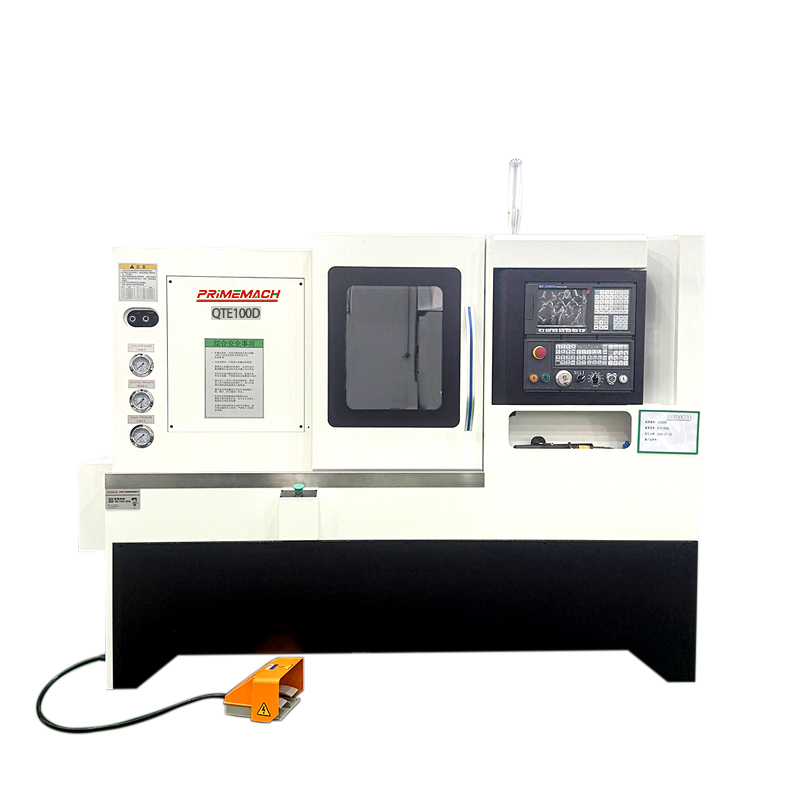
Next, we consider the alternative. There is a strong case for the CNC Gang Tool Lathe. This architecture mounts tools in a linear row on the cross-slide. It eliminates tool turret indexing time entirely. You achieve rapid chip-to-chip transitions. The lack of a turret also provides exceptional rigidity and thermal stability. It is the best fit for shorter implants. Pedicle screws and dental abutments match perfectly here. High spindle speed and rapid cycle times dictate your return on investment.
Feature | Swiss-Type Lathe | Gang Tool Lathe |
|---|---|---|
Best L/D Ratio | Greater than 3:1 | Less than 3:1 |
Setup Complexity | High (requires guide bushing tuning) | Low (simple linear tool layout) |
Chip-to-Chip Time | Moderate | Extremely Fast |
Rigidity | Moderate (relies on bushing) | Very High (solid cross-slide) |
When defining a capable Small Component CNC Lathe Machine, you must demand specific features. Spindle runout tolerances must remain sub-micron. Any spindle wobble transfers directly into the titanium thread profile. The machine must also feature active thermal compensation systems. These systems prevent dimensional drift as the casting heats up during continuous shifts. Finally, you need seamless integration capabilities. The machine must easily connect with automated bar feeders and high-pressure coolant delivery units.
Producing aggressive thread profiles on medical screws requires specialized techniques. You can generally approach this using two different methods. The choice impacts both cycle time and part quality.
Single-point threading represents the traditional approach. The mechanism relies on multiple passes using a single insert. The tool incrementally cuts deeper into the titanium stock until it achieves the final profile.
This method carries severe limitations. High radial pressure pushes the titanium part away from the tool. This deflection causes chatter and destroys dimensional accuracy. Single-point cutting also requires very slow cycle times. You must take many shallow passes to manage the heat. We typically restrict this use case to prototyping. It works well for low-volume runs. It also fits screws featuring unique, non-standard thread profiles where custom whirling rings are unavailable.
Conversely, thread whirling stands as the undisputed industry standard for bone screws. The mechanism involves a specialized cutter ring. This ring holds multiple carbide inserts. It spins eccentrically around the bar stock. The cutting action happens in a single pass. The ring operates directly next to the machine's guide bushing.
Thread whirling offers massive advantages. First, the kinematics transfer heat directly into the chip. It keeps the part and the tool cool. Second, the balanced cutting forces result in zero deflection. This allows you to cut deep, aggressive thread profiles. Cancellous bone screws require these deep threads for holding power in soft bone tissue. Finally, whirling delivers drastically superior surface finishes. The cutting action extends tool life far beyond traditional single-point methods.
Implementing thread whirling requires specific programming strategies. You must synchronize the main spindle rotation (C-axis) with the whirling spindle RPM and the Z-axis feed rate. Getting this ratio perfect ensures accurate pitch generation. It also eliminates the risk of faceted thread flanks.
Optimizing the cutting zone separates acceptable parts from scrap. Titanium demands strict adherence to specific tooling and cooling principles. You cannot apply standard steel machining logic here.
Insert geometry plays a pivotal role. You must mandate sharp, positive rake angles. These sharp edges shear the titanium cleanly. They reduce cutting forces and minimize heat generation. You must aggressively avoid honed edges. Honed or heavily radiused tools cause rubbing. Rubbing instantly leads to work hardening on the titanium surface. Once the material work-hardens, it ruins the next tool pass. Use polished inserts to prevent titanium from welding to the carbide.
Coolant delivery systems require equal attention. The industry typically prefers straight cutting oil over water-soluble coolants for titanium threading. Cutting oil provides much higher lubricity. This lubricity drastically reduces the risk of material galling. Galling occurs when titanium friction-welds to the cutting insert. Oil prevents this micro-welding process.
Furthermore, you face the absolute necessity of high-pressure delivery. Standard flood coolant fails completely in medical machining. You need systems delivering 1,000+ PSI. You must direct this pressure precisely at the cutting zone. High-pressure oil acts as a wedge. It fractures the chips and forces heat away from the cutting edge.
Managing chip evacuation presents a massive daily headache. Titanium naturally forms long, stringy chips during continuous turning. These chips love to wrap around the workpiece. When chips tangle, they scratch the delicate thread finish. They can also snap the delicate bone screw entirely.
You must evaluate machines based on their chip management capabilities. Look closely at the drop-zone design. Gravity should pull chips straight down into a conveyor. The tooling layout should provide ample clearance. High-pressure coolant helps break these chips into manageable pieces. Never underestimate the importance of clean chip evacuation.
Manufacturing medical devices goes far beyond cutting metal. You must prove your process is stable, repeatable, and documented. The FDA and global regulatory bodies demand strict adherence to ISO 13485 standards. Your equipment choices dictate how easily you achieve this compliance.
Process Validation relies heavily on the IQ/OQ/PQ framework. Installation Qualification (IQ) and Operational Qualification (OQ) require solid data. You must ensure the chosen CNC Lathe provides transparent data logging. The control system should record spindle loads, axis positioning errors, and thermal variables. You need this objective data to prove the machine operates within specified parameters. Performance Qualification (PQ) proves the process yields consistent parts over time. A thermally unstable machine will fail PQ testing repeatedly.
In-Process Inspection bridges the gap between machining and quality assurance. Relying entirely on post-process measurement creates bottlenecks. It also leads to expensive scrap. We highly recommend integrating optical measurement systems. You can also utilize in-machine probing. These tools verify thread pitch, major diameters, and minor diameters before the machine cuts the part off the bar. Catching a dimensional drift early saves entire batches of expensive titanium stock.
Traceability serves as the backbone of medical manufacturing. You must track every single bone screw back to its raw material origins. Modern shops utilize deep integration between the bar feeder and the machine control. This integration tracks material heat lots directly to specific machine cycle times. If a material defect surfaces later, you can isolate the exact parts produced from that specific bar. Your machine control must support advanced macro programming to handle this serial tracking.
Selecting the ideal equipment for titanium bone screws requires a strategic approach. Do not rely on marketing brochures. You must validate the technology in the real world.
Requesting a run-off forms the most critical step in your purchasing journey. Never purchase based on specifications alone. Require the machine manufacturer to perform a turnkey test cut. Supply them with your specific titanium bar stock. Provide them with your exact thread profile and tolerance requirements. A successful run-off proves the machine, tooling, and coolant systems work together harmoniously.
Evaluate vendor support with the same scrutiny as the hardware. The OEM’s application engineering team dictates your long-term success. Their specific expertise in medical threading and thread whirling is as valuable as the machine itself. Ensure they offer comprehensive training for your operators.
To move forward successfully, implement these action steps:
Audit Your Part Mix: Determine if your average implant length truly requires a Swiss-type machine, or if a more rigid gang tool setup will yield faster cycle times.
Standardize Coolant Strategy: Transition to high-pressure straight cutting oil for all titanium threading operations to eliminate galling.
Implement Whirling: Replace single-point threading with custom thread whirling rings for all high-volume cancellous and cortical screw production.
Lock Down Traceability: Upgrade your machine controls to automatically log material lots and tool wear data for ISO 13485 compliance.
Mastering titanium bone screw production establishes your shop as a premier medical manufacturer. It requires patience, investment, and a refusal to compromise on rigidity and thermal management.
A: Gang tool lathes are highly efficient but lack the guide bushing support of a Swiss lathe. They are best suited for shorter screws or require specialized tailstock support for longer length-to-diameter ratios.
A: Whirling cuts the thread in a single pass near the point of support, preventing the part from deflecting. It also dissipates heat into the chip, preserving tool life and preventing titanium galling.
A: Spindle speeds must be strictly controlled to maintain optimal Surface Footage per Minute (SFM)—typically lower than steel or aluminum to manage heat. Exact RPM depends on the stock diameter and tooling methodology.
A: Burr prevention requires ultra-sharp inserts, precise CNC programming for tool entry/exit paths (chamfering/clipping the thread), and highly rigid machine architectures to eliminate chatter.


