

Views: 0 Author: Site Editor Publish Time: 2026-10-24 Origin: Site


Many production managers struggle to choose between the high-speed efficiency of a CNC tapping center and the heavy-duty versatility of a standard Vertical Machining Center (VMC). You are not alone if you find this decision challenging. Both options fall under the broader umbrella of CNC machining centers, yet they serve distinct operational goals. Selecting the wrong machine architecture often leads to severe consequences. You might experience bottlenecked cycle times on one hand or inadequate cutting rigidity on the other.
This article provides an evidence-based framework for evaluating both machines. You will learn to assess your options based on your specific part mix and material hardness. We also examine facility footprint constraints and targeted return on investment (ROI). By understanding the fundamental kinematic differences, you can confidently specify the right equipment for your shop floor.
Rigidity vs. Speed: VMCs are built for high torque and heavy stock removal on hard metals; CNC tapping centers are optimized for rapid acceleration, deceleration, and fast tool changes.
Application Match: A compact CNC tapping center is the most profitable choice for high-volume aluminum, brass, or die-cast parts requiring extensive drilling and tapping.
Tooling Limitations: Tapping centers generally utilize BT30/BBT30 spindles, limiting their ability to perform deep, aggressive face milling compared to the BT40 or BT50 spindles standard on VMCs.
ROI Driver: The decision should be dictated by your specific cycle-time bottlenecks and the primary material of your production runs, not just upfront capital expenditure.
Before issuing a purchase order, you must define clear success criteria. A successful machine acquisition looks different for every facility. For some, success means reducing overall cycle time by 20%. For others, it involves achieving tighter geometric tolerances on ferrous metals. Sometimes, maximizing limited factory floor space drives the entire purchasing decision. Identifying your primary bottleneck early prevents costly misalignments.
Many shops fall into the versatility trap. Buyers often lean toward a standard VMC because it feels like a safer, "jack-of-all-trades" investment. However, buying a heavy-duty machine for light-duty parts wastes capital and operational time. A dedicated, specialized machine often yields a much faster ROI. You should avoid over-engineering your equipment solution. Match the machine strictly to the tasks you actually perform daily.
Material and volume assessments must guide your choice. High-volume, light-metal applications demand distinct machine kinematics. These jobs require rapid axis movements and instantaneous spindle responses. Conversely, low-volume, heavy-steel applications require massive cast iron frames and high-torque spindles. If you run aluminum heat sinks all day, you need speed. If you machine inconel aerospace brackets, you need torque and rigidity.
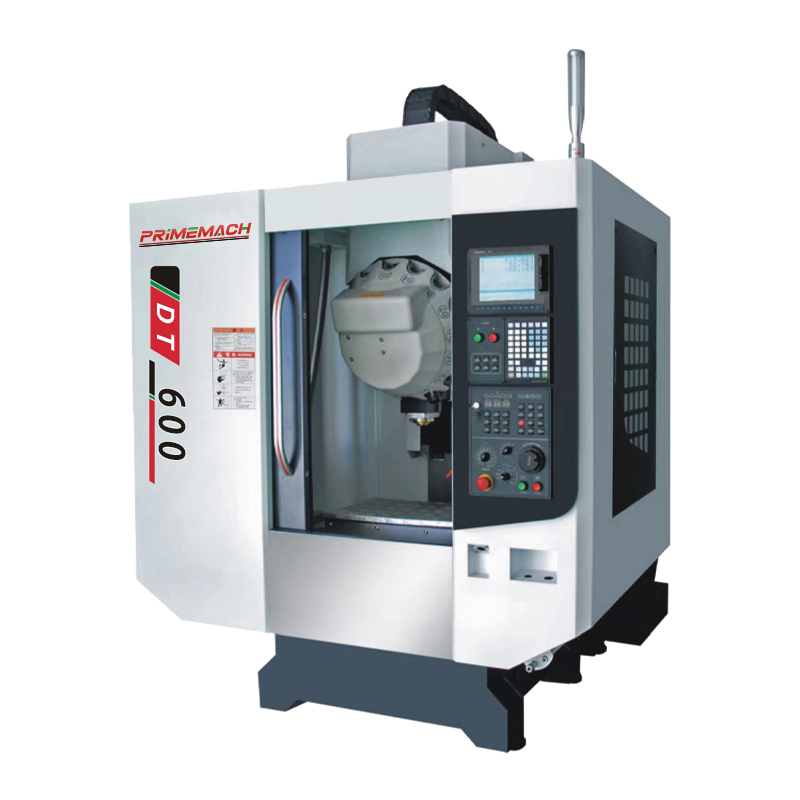
To make an informed decision, you must understand how these machines differ structurally. Engineers design tapping centers and VMCs for entirely different physical limits. These core architectural variances dictate how each machine performs on your floor.
Spindle dynamics represent the most significant divergence. Tapping centers utilize high-speed, direct-drive BT30 or BBT30 spindles. These spindles accelerate and decelerate almost instantly. They excel at rapid rigid tapping. Standard VMCs typically feature belt-driven or geared BT40/BT50 spindles. These larger tapers deliver high torque at lower RPMs, enabling heavy stock removal on tough alloys.
Automatic Tool Changer (ATC) speeds also vary dramatically. Tapping centers usually deploy turret-style or front-mounted ATCs. These mechanisms swap tools incredibly fast. Tool-to-tool times often drop under 1.5 seconds. Standard VMCs rely on heavier, swing-arm ATCs. While robust, they carry heavier tools and typically take 2.5 to 4 seconds per tool change. Over thousands of cycles, those seconds compound into hours of lost production time.
Axis acceleration and guideway configurations further separate the two platforms. A tapping center features lighter castings. This reduced mass allows for extreme G-force acceleration on linear guideways. Non-cutting time plummets as the spindle zips between hole locations. Heavier VMC castings limit acceleration. Their mass provides excellent vibration damping but severely restricts rapid traverse rates.
Table 1: Key Architectural Specifications Comparison
Specification | CNC Tapping Center | Standard VMC |
|---|---|---|
Spindle Taper | BT30 / BBT30 | BT40 / BT50 |
Drive Type | Direct Drive | Belt or Geared |
Tool Change Time | 1.0 - 1.5 seconds | 2.5 - 4.0 seconds |
Acceleration | High G-Force (Light Mass) | Moderate (Heavy Mass) |
Primary Target Material | Aluminum, Brass, Plastics | Steel, Titanium, Cast Iron |
Certain industries thrive when deploying a CNC tapping center. These machines excel in high-volume environments where tool changes happen frequently. The 3C industry (computers, communications, and consumer electronics) relies heavily on them. Smartphone housings, laptop chassis, and tablet frames require hundreds of tiny drilled and tapped holes. Tapping centers finish these operations in a fraction of the time a VMC takes.
Automotive die-cast parts also represent an ideal use case. Manufacturers producing aluminum engine covers or transmission housings benefit from rapid chip-to-chip times. Medical device manufacturers use these machines to produce surgical instruments and orthopedic implants efficiently. The extreme speed allows factories to hit aggressive production quotas.
This architecture functions perfectly as a CNC machining center for small parts. When parts fit within a smaller work envelope, you do not need massive axis travels. You gain superior chip-to-chip times by keeping the tooling closer to the workpiece. The fast turret ATC ensures the spindle spends more time cutting and less time waiting.
Footprint and facility efficiency provide another massive advantage. A compact CNC tapping center maximizes revenue per square foot. Factories can install three tapping centers in the space required for two standard VMCs. High-density work cells become possible. Furthermore, smaller spindle motors and lighter axes draw significantly less electricity. Lower overall power consumption helps improve your daily operational margins.
Despite the blistering speed of a tapping center, many applications absolutely demand a standard Vertical Machining Center. Heavy stock removal requires uncompromising rigidity. When machining titanium, tool steel, or cast iron, low-end spindle torque is non-negotiable. A BT40 or BT50 spindle plows through tough materials without stalling. If you try to push a BT30 spindle too hard in steel, you risk stalling the motor or breaking tools.
Vibration damping remains a critical factor for surface finish and tool life. A standard VMC utilizes a heavier cast-iron frame. This massive base absorbs cutting forces efficiently. It prevents chatter during aggressive end-milling operations. Large-diameter boring operations also require this structural stability. The lighter frame of a tapping center simply cannot absorb the harmonic vibrations generated by heavy roughing cuts.
Flexibility is paramount for changing job shops. Standard CNC machining centers offer a safer fallback for contract manufacturers. If you cannot predict your future part mix, versatility becomes your best defense. A VMC handles aluminum efficiently enough, but it easily pivots to machine a batch of stainless steel components the next day. Contract shops requiring maximum versatility usually prefer standard VMCs to handle unpredictable client demands.
Procuring a new machine involves more than just selecting the right specifications. You must prepare for operational realities and hidden implementation costs. Tooling transitions often surprise production managers. If your shop currently standardizes on BT40 tooling, transitioning to a tapping center requires purchasing entirely new BT30 or BBT30 tool holders. This initial tooling expense can be substantial. You must account for new collets, pull studs, and shrink-fit holders.
Automation readiness requires careful evaluation. Many modern shops integrate robotic load and unload systems. Standard VMCs generally offer spacious side doors or auto-door options designed for automation. Tapping centers often feature fixed tables or highly specific front-loading designs. You must plan your robotic integration carefully. Discuss robot access constraints with the machine tool builder early in the procurement phase.
Thermal displacement risks present a unique operational challenge for high-speed machines. The extreme rapid traverse rates of tapping centers generate significant heat along the ball screws and guideways. As temperatures rise, the machine frame can expand slightly. This expansion affects tight tolerances over a long shift. You must evaluate thermal compensation features during the buying stage. Look for machines offering chilled ball screws or advanced software-based thermal compensation algorithms to maintain accuracy.
Choosing between these two platforms requires a logical, data-driven approach. You can use a simple decision matrix to guide your team. Analyze your current and projected part files to see where your operations fall.
Follow this basic logic matrix:
If more than 70% of your operations involve drilling and tapping on non-ferrous metals (like aluminum or brass), you should shortlist a CNC tapping center. The speed advantages will dominate your production cycle.
If heavy roughing, large part envelopes, or steel components dominate your schedule, you must shortlist a standard VMC. Rigidity and torque will dictate your success.
Never base your final decision purely on a brochure. We strongly recommend demanding a test cut. Send your actual CAD/CAM files to the machine tool builder. Ask them to run a time-study simulation using your specific part. Verify their cycle time claims before issuing a purchase order. Witnessing the test cut allows you to check for surface finish quality and actual chip-to-chip times. This verification step removes the guesswork from your capital investment.
Neither machine is universally superior to the other. The correct choice relies entirely on aligning machine kinematics with your specific demands. You must weigh the metallurgical requirements and volumetric goals of your parts. High-speed aluminum production demands the agility of a tapping center. Heavy steel hogging requires the brute strength of a standard VMC.
Your next step involves auditing your current production floor. Measure your existing non-cutting time. Track how many seconds your current machines spend executing tool changes and rapid movements. If those non-value-added seconds dominate your cycle times, transitioning to a high-speed tapping center is mathematically justified. Analyze your data, consult with operators, and make a decision driven by cycle-time reality rather than habit.
A: Yes, it can. However, it is primarily limited to light-duty milling, profiling, and facing on softer materials like aluminum and plastics. The lower rigidity of the BT30 spindle prevents it from taking deep, aggressive milling cuts commonly performed on a standard VMC.
A: Tapping centers typically achieve incredibly fast tool changes, often between 1 to 1.5 seconds. Standard VMCs usually average 2.5 to 4 seconds. On parts requiring dozens of drilled holes and tapped threads, these saved seconds aggregate into significant daily time savings.
A: Yes. Many modern tapping centers easily accept compact rotary tables. This retrofit allows for multi-sided machining on small, complex parts. You must pay close attention to the weight limits, as their trunnions and tables handle strictly limited capacities.
A: A tapping center generally requires 30% to 50% less footprint than a standard VMC. This compact design allows shops to deploy high-density work cells, significantly increasing the revenue generated per square foot of factory floor space.


