

Views: 0 Author: Site Editor Publish Time: 2026-10-26 Origin: Site


The spindle taper acts as the primary bottleneck or ultimate enabler for material removal rates (MRR). It dictates tooling expenses. It also determines overall machine rigidity. Choosing between BT40 and BT50 involves much more than selecting a simple spindle size. This choice dictates the casting mass of your equipment. It establishes power draw limits. It also locks you into a specific tooling ecosystem. Over-specifying drains capital and slows dynamic operations. Under-specifying leads to catastrophic chatter, rapid tool wear, and rejected parts.
This guide offers a neutral, engineering-focused framework. We match spindle specifications directly to your exact production demands. We will help you avoid the common "bigger is always better" fallacy. You will learn how to evaluate material hardness, tool reach, and part volume accurately. We provide clear criteria for selecting the optimal interface for your specific machining requirements.
BT40 is optimized for high-RPM, medium-duty applications, offering faster acceleration and lower tooling costs, making it ideal for aluminum, light steel, and complex 3D profiling.
BT50 delivers superior rigidity and torque transfer, serving as the necessary foundation for high-torque cutting in hard alloys and large-scale stock removal.
Advanced configurations (like dual-contact BBT spindles) can bridge performance gaps, but baseline selection must align with the shop's primary material and part volume.
We must first frame the underlying business problem. Manufacturers face a constant trade-off between spindle speed and mechanical rigidity. High RPM allows fast feed rates in soft materials. High torque pushes large cutters through tough alloys. Incorrect taper selection ruins profitability. An undersized spindle causes excessive tool wear and severe chatter. An oversized spindle wastes capital and extends cycle times through slow acceleration.
The BT taper follows the MAS 403 standard. It utilizes a highly proven 7/24 taper ratio. This means the diameter changes by seven inches over twenty-four inches of length. This specific geometry creates a self-releasing taper. It allows fast and reliable tool changes. The standard dictates strict flange thickness requirements. It ensures precise automatic tool changer (ATC) compatibility. It also demands exact gauge line accuracy for repeatable Z-axis positioning.
You must define your primary operational metric clearly. Do you want to optimize for rapid contouring and mirror surface finishes? Or do you need to maximize volumetric material removal in tough alloys? Defining your success criteria simplifies the selection process entirely. Your primary workpiece material directly dictates the required spindle physics.
The BT40 spindle serves as the agile standard for modern manufacturing. Job shops require daily versatility. The BT40 delivers exactly this operational flexibility. It balances speed and performance beautifully across various materials.
Performance capabilities shine in high-speed environments. Standard BT40 spindles easily reach 10,000 to 20,000 RPM. A lighter spindle assembly allows much faster Z-axis acceleration. It also improves machine deceleration rates. You minimize non-cutting time during complex 3D surface profiling. Faster pecking cycles in aluminum save immense cycle time over large production runs.
Agile movements: Reduced mass allows dynamic axis reversals without servo strain.
Cost efficiency: Standard tool holders cost significantly less than larger alternatives.
High spindle speeds: Smaller bearings generate less heat, enabling higher sustained RPMs.
However, distinct physical limitations exist. BT40 spindles remain prone to chatter under heavy radial loads. They struggle when running large-diameter face mills. Long-reach boring bars also cause intense harmonic vibration. This stems from a lower drawbar pull force compared to larger tapers. The machine simply cannot hold the tool rigid enough during massive lateral engagement.
We must discuss the current implementation reality. Manufacturers often utilize dual-contact configurations like BBT40. Standard tapers leave a tiny gap at the flange. BBT40 provides simultaneous taper and flange contact. This simple upgrade significantly improves baseline rigidity. You gain enhanced vibration dampening. You achieve this without upgrading to a massive taper class. It serves as a perfect middle ground for progressive job shops.
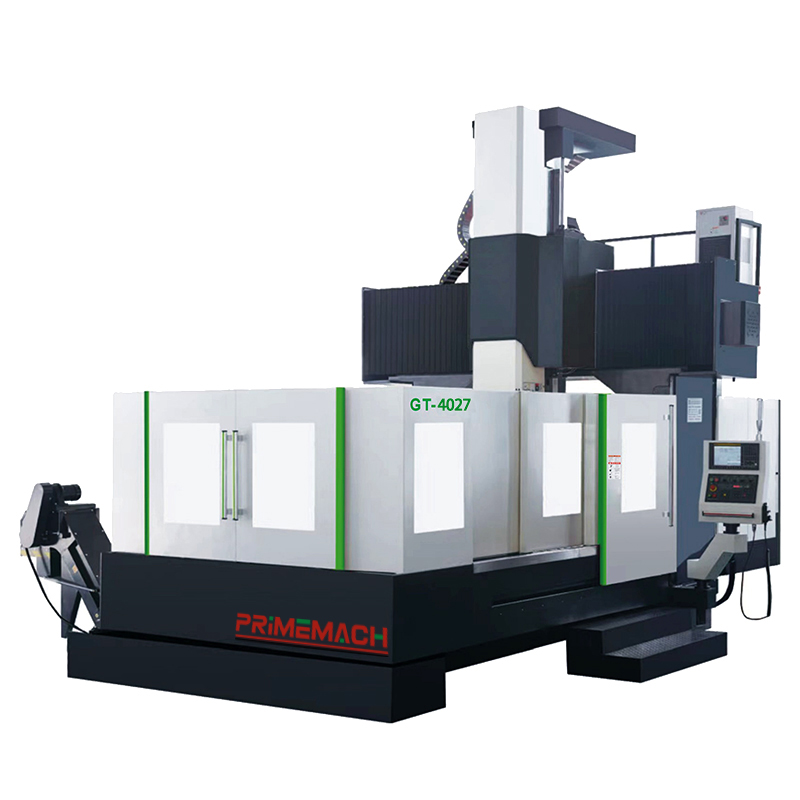
You choose a BT50 spindle for extreme high-torque environments. It serves as the ultimate interface for low-vibration cutting. High metal removal rates demand immense structural support. This massive taper provides the required mechanical foundation for a heavy duty machining center. You cannot fake rigidity when cutting hardened steels.
Performance capabilities exceed smaller tapers dramatically. The massive taper surface area provides extreme stiffness. This structural support prevents bell-mouthing during heavy radial cuts. Bell-mouthing happens when heavy cutting forces pry the taper open slightly. BT50 resists this dangerous deformation effortlessly.
Massive cutters: Easily drives indexable face mills exceeding four inches in diameter.
Deep boring: Supports heavy custom boring bars with minimal deflection.
Thermal stability: Large taper mass acts as a heat sink during heavy roughing.
It handles significantly heavier tool assemblies safely. You can deploy long custom boring tools without inducing dangerous chatter. The drawbar pull force often doubles that of a BT40. This clamps the tool holder with unyielding force.
Bridge-style machine castings offer incredible inherent rigidity. They pair perfectly with massive BT50 spindles. Large envelope machining inherently requires longer tool reaches. Operators must reach deep into massive aerospace or automotive parts. Longer tools act like tuning forks under cutting loads. They vibrate easily and ruin surface finishes.
BT50 provides critical vibration dampening. This mechanical dampening holds tight tolerances across massive workpieces. The heavy bridge casting absorbs the cutting forces. The BT50 spindle transfers those forces without flexing. This synergy makes heavy-duty milling predictable and highly profitable.
Comparing these tapers requires a structured evaluation. You must align physical features with desired machining outcomes. The table below outlines the core differences across critical dimensions.
Spindle Taper Feature and Outcome Comparison
Evaluation Dimension | BT40 Interface | BT50 Interface |
|---|---|---|
Material Removal Rate (MRR) | Excels in high-speed aluminum pocketing and light alloy contouring. | Dominates high-torque roughing in steel, cast iron, and titanium. |
Tool Holder Mass | Lighter mass enables rapid tool changes and rapid spindle acceleration. | Heavier mass limits acceleration but provides massive vibration dampening. |
ATC Capacity & Footprint | Allows dense tool magazines in a smaller physical machine footprint. | Requires larger, robust magazines and heavily reinforced tool changer arms. |
Initial Cost Scaling | Lower baseline capital requirements for pull studs and tool holders. | Requires significant premium for massive bearings, castings, and tooling. |
We must also provide alternative context regarding HSK and SK tapers. Sometimes, bypassing the BT standard entirely makes engineering sense. HSK63 and HSK100 excel in ultra-high-speed dynamic milling. Their hollow shank expands at high RPM to grip the spindle tighter. However, BT remains the unshakeable standard for a heavy-duty gantry CNC machining center. BT offers unmatched ruggedness and broad market availability. SK (DIN 69871) offers similar performance to BT but features different flange slots for European tool changers.
Buyers face significant migration risks when changing spindle platforms. We must warn buyers about strict cross-compatibility issues. BT and CAT tapers look extremely similar. However, they are not natively interchangeable. You cannot swap them without changing the drawbar, the pull studs, and the ATC gripper arms.
BT features a perfectly symmetrical V-flange. CAT utilizes an asymmetrical flange designed for ANSI standards. Furthermore, BT uses metric threads for pull studs. CAT uses imperial threads. Mixing these standards leads to dropped tools and destroyed spindles. You must maintain strict inventory control.
We highly advise buyers to audit their existing tool cribs. Upgrading a shop from BT40 to BT50 requires parallel investments. You must purchase new tool holders, collets, and pull studs. This tooling investment often exceeds the base spindle upgrade cost. You must calculate this capital requirement upfront.
Finalizing your specification requires strict logic. Follow this conditional decision tree to finalize your choice:
If you primarily machine aluminum and require rapid 3D contouring, then choose BT40.
If your material hardness consistently exceeds 40 HRC, then mandate a BT50 interface.
If you regularly utilize indexable face mills larger than three inches, then step up to BT50.
If your floor space strictly limits the ATC footprint, then BT40 offers the required density.
If you need heavy roughing but want higher speeds, then investigate dual-contact BBT50 options.
The BT40 versus BT50 decision represents a comprehensive ecosystem choice. It is never just a simple component upgrade. Your spindle dictates your machine casting requirements. It controls your maximum tool weight. It fundamentally sets your ceiling for material removal rates.
Over-specifying your spindle reduces manufacturing agility. It wastes energy and slows down rapid axis movements. Conversely, under-specifying compromises part quality severely. It causes chatter, ruins surface finishes, and destroys expensive carbide inserts prematurely.
We encourage buyers to consult directly with application engineers. Run comprehensive time-studies on your specific parts. Test your hardest materials and longest tool reaches. Use this hard data before finalizing the specification for your next precision gantry CNC machining center. Proper alignment guarantees long-term manufacturing profitability.
A: No, they are not natively interchangeable. BT and CAT tapers use different flange geometries. BT features a symmetrical V-flange. CAT utilizes an asymmetrical V-flange designed for different automatic tool changer (ATC) gripper arms. Furthermore, they use entirely different pull stud threads. BT uses metric threads, while CAT relies on imperial threads. Mixing them causes severe damage.
A: A standard BT spindle only makes contact along the tapered surface. A small gap remains between the tool flange and the spindle face. Dual-contact (BBT) systems eliminate this gap. The tool holder contacts both the taper and the spindle face simultaneously. This significantly increases radial rigidity and reduces deflection during high-speed machining.
A: Physics dictates larger bearings generate more heat. Therefore, standard BT50 spindles run slower than BT40 variants. However, modern high-end BT50 spindles use advanced chilling systems and ceramic bearings. These premium configurations can achieve exceptionally high RPMs. You will pay a significant capital premium for this specialized capability.
A: Upgrading depends heavily on your cutter diameter and depth of cut. As a general industry rule, continuous roughing in materials above 40 HRC demands a BT50 interface. You also need BT50 when running indexable face mills larger than three inches. BT40 simply lacks the drawbar pull force for these heavy applications.


