

Views: 0 Author: Site Editor Publish Time: 2026-08-11 Origin: Site


Inconel stands as the ultimate backbone of modern aerospace engineering. Its immense tensile strength and naturally poor thermal conductivity make it essential for jet engine components. However, these exact properties make it notoriously destructive to cutting tools. Unpredictable tool failure during turning operations creates massive liabilities on the shop floor. It leads directly to scrapped high-value parts, painful AS9100 compliance failures, and severely compromised production margins.
You simply cannot afford to guess when an insert might fracture mid-cycle. To survive in aerospace manufacturing, you must establish a highly predictable machining environment. We will explore how aligning your tool selection, coolant delivery strategy, and underlying machine rigidity solves these intense challenges. You will learn how to stabilize your consumable costs, maintain strict aerospace dimensional tolerances, and master the complex art of nickel-alloy turning.
Heat concentration and rapid work hardening are the primary causes of catastrophic tool failure in Inconel 718 and 625.
Built-Up Edge (BUE) and depth-of-cut notch wear can be mitigated, but not eliminated, through strict speed/feed control and high-pressure coolant.
Standard turning centers often lack the spindle torque and structural dampening required; a heavy-duty CNC lathe is typically required to achieve predictable tool life.
Evaluating equipment for aerospace Inconel machining must prioritize thermal stability, low-RPM torque, and rigid way construction over rapid traverse speeds.
Machining nickel-based superalloys introduces unique physics to your cutting zone. Inconel stubbornly retains its structural strength even at extreme temperatures. This creates the root problem of aerospace turning. During typical metal cutting, the sheared chip absorbs the generated heat and carries it away. Inconel behaves entirely differently. The heat generated during turning transfers directly into the cutting tool. The chip absorbs very little thermal energy. This continuous heat load degrades carbide edges rapidly.
Operators frequently encounter several catastrophic wear mechanisms when turning these materials. You must understand them to prevent them.
Depth-of-Cut (DOC) Notch Wear: This occurs exactly at the cutting depth line. Previous passes leave behind heavily work-hardened layers. Original forging skins also feature abrasive surface scales. These hard layers gouge a distinct notch into the insert line.
Built-Up Edge (BUE): This happens frequently at lower cutting speeds. Hot Inconel material physically welds itself to the insert edge. When this welded material eventually breaks away, it takes microscopic pieces of the carbide along. This causes rapid micro-chipping.
Flank Wear & Plastic Deformation: Nickel-based superalloys are incredibly abrasive. The extreme heat load softens the binder in carbide inserts. The cutting edge physically deforms under the intense pressure and abrasive friction.
Wear Type | Primary Cause | Effective Countermeasure |
|---|---|---|
DOC Notch Wear | Work-hardened layers, abrasive scale | Vary cutting depths, use round inserts |
Built-Up Edge (BUE) | Low speeds, poor lubrication | Increase high-pressure coolant, adjust SFM |
Plastic Deformation | Extreme localized heat | Select heat-resistant coated grades |
Unchecked tool wear carries severe aerospace implications. A dull insert pushes material rather than shearing it cleanly. This friction induces residual stresses and microscopic cracks into the component surface. These unseen defects compromise surface integrity entirely. They directly violate strict aerospace part certifications and put flight safety at risk.
Aerospace turning requires a fundamental shift in how you evaluate machinery. You must prioritize heavy vibration dampening over high-speed rapid movements. Rigidity always beats speed when cutting superalloys. A standard CNC Lathe often features a lightweight design meant for aluminum or mild steel. It will generate micro-vibrations during heavy cuts. This chatter destroys carbide and ceramic inserts almost instantly when cutting Inconel.
You need specialized architectural features to survive superalloy machining. Box way construction offers superior vibration absorption compared to standard linear guide ways. The increased surface contact dampens resonant frequencies before they reach the tool tip.
Spindle performance also dictates your success. Inconel requires very low surface footage (SFM) to prevent rapid insert burning. Therefore, spindles must deliver maximum physical torque at lower RPMs. Standard machines lose power at low speeds. They stall or suffer micro-hesitations during heavy roughing. A true heavy-duty setup maintains absolute rotational authority regardless of the cutting pressure.
Thermal stability plays an equally massive role. Aerospace turning cycles run long and generate incredible ambient heat. Massive cast-iron machine bases resist thermal distortion. They ensure the spindle and turret remain aligned over a multi-hour cycle.
Evaluate your equipment success purely on volumetric material removal rates (MRR) achieved without inducing chatter. If your machine shakes, your tools will fail.
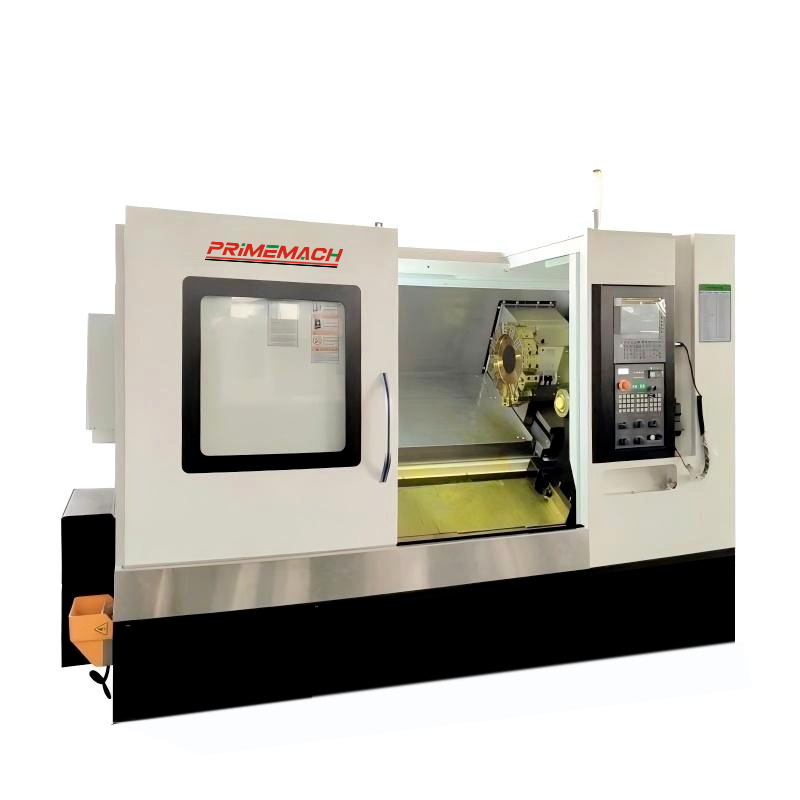
Selecting the right cutting material makes or breaks your operation. You need specific geometries and coatings to counteract Inconel's defensive properties. Your insert strategy dictates your entire programming approach.
Carbide inserts remain the industry standard for interrupted cuts and slower operations. You should select PVD or CVD coated carbides designed specifically for high-heat environments. They require remarkably sharp cutting edges. Positive rake angles help shear the material cleanly. This sharp shearing action minimizes the dangerous work-hardening effect on the remaining part surface.
Sialon ceramics and whisker-reinforced ceramics offer a different approach. They are highly viable for continuous turning operations at much higher speeds. Ceramic tools actually utilize the generated heat to plasticize the shear zone. They turn the metal red-hot, making it easier to remove. However, ceramics are incredibly brittle. Running them successfully demands an extremely rigid CNC Lathe for High-Strength Parts to prevent instant shattering.
Your CAM programmer holds immense power over tool life. They must deploy strategic toolpaths to trick the material. Consider these essential programming rules:
Vary the depth of cut: Program each roughing pass at a slightly different depth. This prevents localized notch wear from destroying one specific spot on the insert edge.
Implement dynamic roughing: Use advanced toolpaths to maintain incredibly consistent chip loads. Spikes in cutting pressure cause immediate micro-chipping.
Never dwell in the cut: If a tool stops moving while engaged, it rubs the material. This causes instant, severe work hardening. The next pass will likely destroy the insert.
Heat management dictates your overall profitability. Standard flood coolant systems fail miserably during superalloy turning. When basic flood coolant hits the red-hot cutting zone, it vaporizes instantly. This creates a steam cushion called a vapor barrier. This barrier physically pushes the incoming coolant away from the insert edge.
High-Pressure Coolant (HPC) systems are completely mandatory. You need pressures of 1,000 PSI or higher to forcefully break through the vapor barrier. This immense pressure shoots liquid directly into the microscopic space between the chip and the insert.
Delivering the fluid correctly matters just as much as pressure. Through-tool coolant plumbing routes the liquid through the tool holder itself. It directs the fluid exactly at the critical cutting edge and chip interface. This achieves three vital things simultaneously. It lubricates the cut, drastically cools the carbide, and physically fractures the notoriously stringy Inconel chips into manageable pieces.
Many shops hesitate to upgrade their coolant delivery. They see the upfront cost of a high-pressure system as too expensive. However, this upgrade pays for itself incredibly rapidly. Proper HPC easily doubles or triples your expensive insert life. More importantly, it prevents stringy chips from recalculating around the chuck and destroying a highly valuable aerospace forging.
Evaluating the financial return on heavy-duty equipment requires looking beyond the initial sticker price. You must focus intensely on the daily operational expenditures and the true cost per part produced. The price of consumable tooling can easily dwarf machine payments if left unmanaged.
Standard machines struggle to cut nickel alloys efficiently. This lack of rigidity transfers severe vibration directly into your cutting tools. A cheaper, lighter machine might save capital upfront, but it will consume carbide inserts at three times the normal rate. If your operators constantly swap broken inserts, your cost per part skyrockets. These inflated consumable costs will completely negate any initial capital savings within just a few months. Investing in a properly built Heavy-Duty CNC Lathe stabilizes these hidden daily costs.
Predictability generates profit. When a rigid machine creates predictable tool wear, you regain control of your schedule. You avoid catastrophic mid-cycle failures that ruin expensive forgings. Predictable wear allows you to utilize macro-programming and automated tool life management. The machine will simply swap to a fresh sister tool after a designated number of parts. This keeps the spindle turning and operators focused on quality.
Aerospace manufacturing demands flawless documentation and reliable processes. Reliable equipment ensures incredibly consistent dimensional accuracy across entire batches. Superior rigidity guarantees excellent surface finishes without stress fracturing. This reduces heavy QA bottlenecks and drastically lowers your part rejection rates. Passing inspections the first time directly boosts your bottom line.
Upgrading your production capabilities requires a methodical evaluation process. Whether you upgrade internal assets or seek an external partner, you need strict criteria.
Audit your current baseline first. Review your spindle load meters and analyze historical vibration data. When evaluating new machine tool builders, demand rigorous test cuts. Require them to perform these runoffs specifically using Inconel 718 forgings. Cutting mild steel proves absolutely nothing. Verify they integrate high-pressure coolant natively. Ensure they offer robust tool-monitoring software to catch wear before failure.
If you outsource components, audit the supplier heavily. Verify their actual equipment roster. Look specifically for the presence of heavy-duty, box-way turning centers. Request detailed case studies from them. They must demonstrate strong statistical process control (SPC) specifically on nickel-alloy aerospace components. If they lack data, they likely lack the process control you need.
Successful Inconel machining is not about finding a magic tooling solution; it requires a deeply systemic approach.
You must combine rigid machine architecture, targeted high-pressure coolant delivery, and highly disciplined CAM programming.
Never compromise on low-RPM spindle torque and box-way construction when turning aerospace superalloys.
Investing in properly configured equipment turns a traditionally high-risk aerospace application into a predictable, highly profitable process.
Audit your current turning operations today. Identify where your consumable tooling costs leak profits. Begin mapping out a transition toward heavier, more rigid machinery equipped with high-pressure coolant capabilities. Your aerospace margins depend entirely on predictable tool life.
A: Your starting point depends heavily on your tooling material. For carbide inserts, operators typically start between 100 and 150 SFM. Pushing faster risks immediate thermal degradation. Ceramic inserts run much faster, often between 600 and 1000 SFM, because they utilize heat to plasticize the cut. Your machine's rigidity heavily dictates the true maximum speed.
A: You must program your CAM paths to vary the depth of cut between successive roughing passes. This prevents the abrasive skin from gouging the exact same spot on the insert edge. Using round inserts or tools with aggressive lead angles also thins the chip, distributing the cutting force over a larger area.
A: There is a strict divide based on tooling. When using carbide inserts, high-pressure coolant (1000+ PSI) is absolutely mandatory to prevent immediate failure. Conversely, you typically run ceramic inserts completely dry. Applying coolant to red-hot ceramics causes massive thermal shock, shattering the insert instantly.
A: Standard machines are often rated for high horsepower at maximum RPMs. High-strength superalloys require very low RPMs. Standard spindles lack the low-end physical torque necessary to push through heavy material at 50 RPM. You need a specialized gearbox or high-torque motor designed specifically for heavy roughing.


