

Views: 0 Author: Site Editor Publish Time: 2026-08-24 Origin: Site


Oilfield threading operates strictly under a zero-margin-for-error philosophy. Thread failure on Oil Country Tubular Goods (OCTG) often causes catastrophic drilling delays. Wellbore pressures easily exceed 10,000 PSI. Dropped strings trigger expensive fishing operations. Environmental blowouts represent absolute worst-case scenarios for operators. The energy sector has aggressively shifted away from manual threading. Modern machining facilities demand automated precision. Strict American Petroleum Institute (API) standards drive this technological shift. Furthermore, proprietary premium thread designs require tighter tolerances than traditional profiles. You must equip your shop floor perfectly. We built this comprehensive evaluation framework for machine shops and drill pipe manufacturers. It helps you assess, specify, and procure turning equipment accurately. You will learn to evaluate bed rigidity effectively. We will show you how to match spindle bores to your product mix. This knowledge ensures you avoid over-engineering your facility. It also prevents under-engineering critical production lines.
API Compliance Demands Rigidity: Machining tapered oilfield threads requires exceptional bed rigidity to prevent chatter and maintain tolerances across long passes.
Spindle Bore is the Bottleneck: Matching the machine's hollow spindle diameter to maximum pipe sizes is the primary filter for equipment shortlisting.
Dual Chucks are Non-Negotiable: Safely rotating heavy, long drill pipes requires synchronized front and rear workholding.
Tailstock Integration: A CNC Lathe Machine with Tailstock and steady rests is mandatory for controlling runout on extended tubular goods.
Scraping specialized oilfield alloys destroys job profitability instantly. Premium materials like L80, P110, or Q125 steel cost thousands of dollars per joint. Thread galling ruins these expensive materials. Cutting an improper taper angle forces immediate rejection by quality control. Operators face strict daily success criteria. They must consistently cut standard API 5CT threads. These include Round, Buttress, and Extreme Line profiles.
Premium connections elevate the stakes significantly. They feature proprietary metal-to-metal seals. These designs eliminate reliance on thread compounds for pressure containment. You must evaluate equipment beyond simple cycle times. Fast cutting means nothing if the machine drifts out of tolerance. True capability relies entirely on continuous repeatability.
Machining centers operate under heavy mechanical loads. Harsh coolant environments test component durability constantly. We recommend analyzing your current scrap rates before upgrading equipment. High scrap often points directly to poor machine rigidity. Worn spindle bearings also cause unacceptable runout. Your business reputation depends on flawless thread gauges. Every completed connection must pass strict standoff inspections. Failing these checks jeopardizes multi-million dollar drilling contracts.
When specifying a Heavy-Duty CNC Lathe, you must scrutinize several mechanical pillars thoroughly. The hollow spindle bore dictates your absolute maximum throughput. It serves as the primary bottleneck for any oil country lathe. We calculate required bore sizes by adding a clearance margin to the maximum casing outer diameter. For example, processing a standard 9-5/8 inch casing requires at least a 10-inch bore. Larger drill collars might demand 14-inch through-hole capacities.
Dual chuck systems center these massive pipes securely. Long casing joints pass completely through the hollow spindle. You need robust pneumatic or hydraulic chucks on both ends. This dual setup prevents the trailing end from whipping violently. It guarantees the pipe remains perfectly centered during high-speed rotation. Centrifugal forces multiply exponentially on unbalanced tubular goods.
Bed architecture plays a massive role in machining stability. Manufacturers predominantly offer slant bed or flat bed designs. Solid cast-iron mass dampens harmful cutting vibrations. Flat beds usually handle heavier static loads. They utilize wide box-way construction for maximum rigidity. Slant beds provide superior chip evacuation clearance. Threading large-diameter pipe generates heavy, stringy chip volumes. Gravity helps clear these chips away from the cutting zone.
Spindle torque always takes priority over maximum rotational speed. Cutting coarse threads on wide diameters requires immense low-end torque. You must maintain a steady chip load constantly. High spindle RPMs cause rapid insert wear. Consistent torque extends tool life dramatically. It also prevents the spindle from stalling mid-cut. Stalling during a threading pass instantly ruins the workpiece.
Table: Minimum Spindle Bore Recommendations for Standard OCTG Sizes
Standard Pipe Type | Outer Diameter (OD) | Recommended Spindle Bore | Application Focus |
|---|---|---|---|
Production Tubing | 2-3/8" to 4-1/2" | 6.0" to 7.0" | High-speed premium connections |
Intermediate Casing | 5-1/2" to 7-5/8" | 9.0" to 10.0" | API Buttress and Round threads |
Surface Casing | 9-5/8" to 13-3/8" | 14.0" to 16.0" | Heavy roughing, low RPM torque |
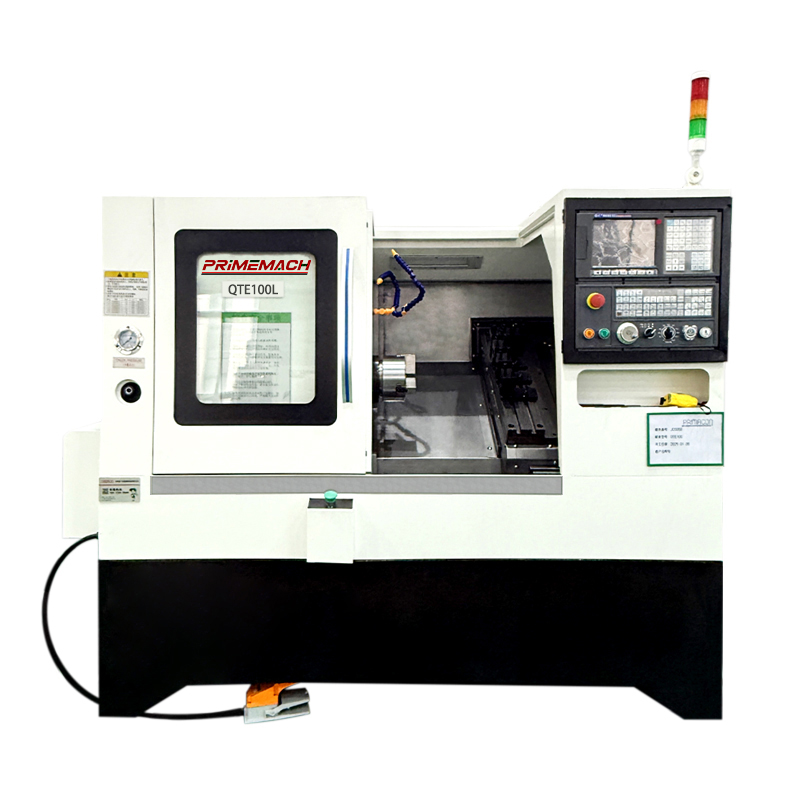
Vibration mitigation directly secures threading quality. Machining 30-to-40-foot casing lengths introduces severe mechanical risks. Unrestrained pipe whipping creates massive harmonic distortion. Runout destroys precise taper angles instantly. It ruins API thread pitches rapidly. We must control the unmachined end of the tube continuously.
Integrating a proper CNC Lathe Machine with Tailstock proves absolutely critical. The programmable tailstock applies consistent axial pressure. It supports heavy pipe ends securely against the chuck. This maintains precise centerline accuracy during heavy threading passes. Without adequate tailstock support, the workpiece deflects away from the cutting tool. Deflection creates unacceptable taper variations along the thread length.
Steady rests offer another layer of crucial mechanical support. You must deploy hydraulic or manual steady rests for long overhanging mass. Open-type steady rests allow faster loading and unloading. Closed-type rests provide superior circumferential rigidity. They wrap around the pipe completely using durable roller bearings. Both types prevent taper distortion during the intense cutting cycle. Operators should always position steady rests as close to the cutting zone as practically possible.
Proper alignment procedures prevent premature equipment failure. You should dial in your steady rests using precision indicators. Misaligned rests force the pipe into a slight bow shape. This bowing effect causes uneven thread depth. It leads to immediate rejection during ring gauge inspections. We highly recommend automated hydraulic steady rests for high-production environments. They reduce operator fatigue and ensure repeatable clamping pressure.
Tooling selection dictates surface finish and operational efficiency. Single-point threading inserts offer excellent application versatility. They cut various pitches easily across multiple pipe diameters. Multi-tooth chasers perform exceptionally well for high-volume API threading. Chasers cut the full thread profile significantly faster. They distribute the cutting load across multiple teeth. However, premium connections usually demand precise single-point tooling. Premium profiles require specialized edge preparations to cut exact metal-to-metal sealing angles.
Programming requires highly capable control systems. Standard G-code threading cycles like G76 simplify basic operations. Yet, oilfield threads involve complex taper angles and tight tolerances. Variable pitch calculations test basic controllers heavily. Your machine's control unit must process these advanced algorithms flawlessly. Fast processing speeds prevent micro-pauses during the threading cycle. Any hesitation leaves a visible witness mark on the sealing surface.
Coolant and chip management prevent catastrophic tooling failures. Deep internal box end threads trap stringy steel chips. These chips wrap around the boring bar tightly. High-pressure coolant systems blast chips out of the cavity. You need systems capable of delivering at least 1,000 PSI. We recommend using programmable coolant nozzles. They aim cutting fluid directly at the insert's cutting edge. This flushes debris instantly and extends insert longevity.
Consider these essential best practices for machining parameters:
Maintain a constant surface speed (CSS) during roughing, but prioritize fixed RPM for the final threading cycles.
Utilize high-pressure coolant exceeding 1,000 PSI specifically for internal box threads.
Match your insert carbide grade and coating (CVD or PVD) to the specific alloy grade.
Program strategic spring passes to eliminate tool deflection on final critical dimensions.
Apply specialized tapping fluids or heavy cutting oils when machining extremely gummy alloys.
Evaluating vendor support ensures long-term facility uptime. You must assess the manufacturer's physical footprint in major oil and gas hubs. Spindle rebuild times dictate your overall facility resilience. Local parts availability remains a strict non-negotiable requirement. A downed machine costs thousands of dollars daily in lost revenue. Service level agreements (SLAs) must guarantee rapid technician dispatch. Verify their stock levels for critical components like ball screws and spindle bearings.
The "Show Me" phase protects your capital investment heavily. Test cutting provides empirical proof of machine capability. You should demand a comprehensive runoff test before signing purchase orders. Supply your specific material grades for this test. Use your proprietary thread gauges during the runoff inspection.
Common evaluation checkpoints during a runoff test include:
Dimensional verification using certified ring and plug gauges.
Surface finish analysis on all metal-to-metal sealing shoulders.
Cycle time consistency across at least ten consecutive parts.
Vibration monitoring during heavy roughing passes.
Coolant system efficacy when deep boring blind box threads.
This rigorous vetting protects your production schedule completely. It confirms the equipment actually handles your specific tubular goods. Do not accept generic test cuts on mild steel. Demand they machine authentic L80 or P110 casing joints. Ask the vendor to demonstrate quick changeovers between different pipe sizes. This reveals the true operational efficiency of the chucking system.
Selecting a CNC Lathe for oilfield connections demands strict technical diligence. It requires balancing dimensional capacity, rigid cast-iron mass, and specialized workholding solutions. Standard turning equipment simply fails under intense OCTG production demands. We advise you to audit your current pipe diameters thoroughly today. Project your future casing sizes clearly before engaging machine vendors. This prevents costly capability gaps later. Finally, gather your detailed mechanical drawings. Compile your API 5CT specifications carefully into a single technical package. Use these organized documents to initiate structured requests for quotes (RFQs). Distribute them to short-listed machine builders who specialize in oilfield applications. Actionable steps taken now prevent catastrophic field failures in the future.
A: API threads rely on intentional thread interference and specialized thread compound to create a pressure seal. Premium connections utilize highly precise metal-to-metal seals and specific torque shoulders. Machining premium connections requires significantly tighter machine tolerances, exceptional bed rigidity, and specialized single-point tooling to guarantee zero leakage under high-pressure well conditions.
A: Long drill pipes and casings pass entirely through the machine's hollow spindle. A rear chuck is absolutely necessary to grip the back end of the heavy pipe. This synchronized dual-chuck system prevents dangerous pipe whipping. It also maintains perfect centerline alignment at the cutting zone, ensuring accurate tapers and preventing machine damage.
A: You can eliminate chatter through systematic operational troubleshooting. First, ensure proper steady rest placement near the cutting zone. Second, reduce your spindle RPM to limit harmonic vibrations. Third, optimize your threading insert edge preparation for lower cutting forces. Finally, verify your machine bed possesses adequate structural cast-iron mass to absorb residual vibrations.


