

Views: 0 Author: Site Editor Publish Time: 2026-05-06 Origin: Site


Medical device manufacturing leaves zero margin for error. Even minor tool runout or unexpected thermal deformation can compromise patient safety and instantly derail regulatory clearance. Upgrading or sourcing a Milling Machine for your facility requires a delicate balancing act. You must align sub-micron precision with scalable, ISO 13485 compliant production workflows. Often, the friction during the decision stage lies in finding equipment capable of bridging the gap between rapid prototyping and validated volume manufacturing. This article provides a comprehensive, evidence-based framework for evaluating modern machining capabilities. We will help you navigate material challenges, mitigate serious implementation risks, and select equipment tailored to stringent regulatory environments. You will learn exactly what specifications matter most when sourcing a high-performance Milling Machine for Medical Device production.
Material competence is non-negotiable: Viable solutions must handle the distinct thermal and mechanical behaviors of medical-grade Titanium, PEEK, and Cobalt-Chrome.
5-axis capabilities dominate complex geometries: Multi-axis platforms minimize setup changes, reducing tolerance stacking on intricate parts like orthopedic implants.
Compliance dictates machine features: On-machine probing, automated tool wear monitoring, and detailed data-logging are critical for IQ/OQ/PQ validation.
Scalability requires thermal stability: Prototype success only translates to production runs if the machine maintains thermal equilibrium during continuous operation.
Standard machining equipment often fails when adapted for medical device manufacturing. The combination of exotic materials, microscopic geometries, and unforgiving regulatory standards demands purpose-built solutions. Understanding these technical hurdles helps you define your exact equipment needs.
Modern medicine relies heavily on miniaturization. Surgical instruments, vascular devices, and neurological implants require dimensions often invisible to the naked eye. Achieving sub-micron tolerances presents severe physical challenges. When cutting tools drop below 0.1mm in diameter, conventional machining rules no longer apply. You face unique hardware limitations.
Spindle vibration becomes your primary enemy. A standard spindle might exhibit runout acceptable for aerospace parts but catastrophic for medical micromachining. Excessive runout snaps micro-tools instantly. Additionally, part deflection occurs when cutting forces push tiny workpieces out of alignment. You need highly rigid machine structures and ultra-precise tool holders to counteract these forces.
Medical-grade materials possess unique mechanical properties. They resist wear and biological rejection inside the human body. Unfortunately, these same properties make them notoriously difficult to machine. You must evaluate how your equipment handles specific material behaviors.
Titanium & Cobalt-Chrome: These alloys generate immense heat during milling. They also suffer from work-hardening. If your cutting tool dwells too long, the material surface hardens, destroying the tool edge. You must maintain consistent chip loads and utilize high-pressure coolant systems to evacuate heat rapidly.
PEEK & Medical Plastics: Polymers present an entirely different challenge. PEEK exhibits significant material spring-back. It deforms under cutting pressure and returns to its original shape, ruining dimensional accuracy. Furthermore, PEEK melts easily. Thermal expansion and stubborn burr formation complicate secondary finishing processes if your spindle RPM and feed rates are mismatched.
Machine inconsistency does more than scrap parts. It directly leads to failed validation batches and severe regulatory non-conformances. FDA 21 CFR Part 820 and ISO 13485 require strict process controls. You must prove your manufacturing process produces identical results every single time. If your equipment suffers from daily thermal drift, your process capability (Cpk) scores will plummet. This inconsistency triggers costly root-cause investigations and delays product launches.
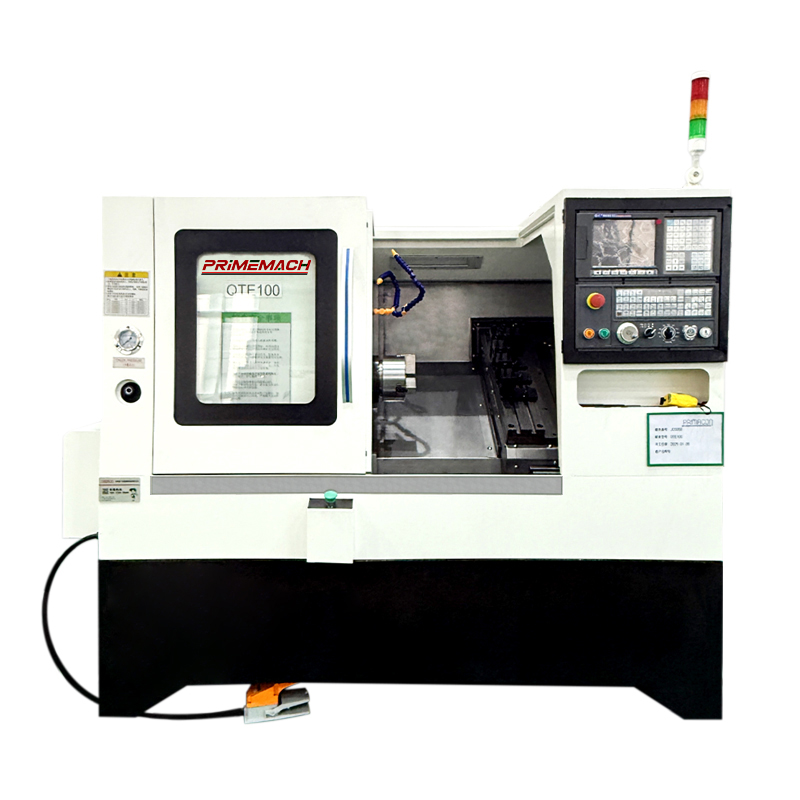
You cannot use a one-size-fits-all approach when selecting equipment. Different medical devices require entirely different machine architectures. Aligning the machine type with your specific device category ensures optimal cycle times and part quality.
These platforms excel at microscopic detailing. They utilize specialized components to eliminate vibration and manage extremely fragile tooling.
Best for: Micro-fluidics, neurological implants, and minimally invasive surgical tips.
Key identifiers: You will find high-RPM air-bearing spindles reaching 50,000 to 80,000 RPM. They feature ultra-low vibration profiles and utilize precision linear scales for exact positional feedback.
Complex anatomical geometries demand multi-axis articulation. 5-axis machines manipulate the tool and the workpiece simultaneously. This capability drastically reduces human intervention and eliminates the errors associated with manually moving parts between fixtures.
Best for: Orthopedic implants like knees and hips, complex dental prosthetics, and multi-faceted bone plates.
Key identifiers: Look for heavy-duty trunnion tables, dynamic collision avoidance software, and advanced contouring accuracy systems.
When you need to produce long, slender components in high volumes, hybrid centers offer unmatched efficiency. They combine turning and milling operations into a single continuous process.
Best for: High-volume production of cylindrical components requiring secondary milling features. Examples include bone screws and dental abutments.
Key identifiers: These machines utilize guide bushings to support the material close to the cutting tool. They also feature dual spindles and extensive live tooling capabilities.
Platform Type | Primary Application | Critical Hardware Features |
|---|---|---|
High-Speed Micro-Milling | Micro-fluidics, surgical tips | 50,000+ RPM air-bearing spindles, linear scales |
5-Axis Simultaneous | Orthopedic implants, bone plates | Trunnion tables, dynamic collision avoidance |
Mill-Turn Hybrid Centers | Bone screws, dental abutments | Guide bushings, dual spindles, live tooling |
Sourcing a reliable Milling Machine demands a strict feature-to-outcome evaluation matrix. You must look beyond basic marketing specifications. Focus on features that directly guarantee repeatability and mitigate production risks.
Continuous production generates immense heat inside the machine casting and spindle. As metal expands, cutting coordinates shift. This thermal drift ruins tight tolerances.
Metric to evaluate: Look for coolant-through-spindle capabilities. Inspect the machine for chilled ballscrews and advanced thermal compensation software.
Outcome: Active cooling eliminates dimensional drift during 24/7 production runs. It ensures the 100th part matches the precise dimensions of the 1st part.
Best Practice: Always ask vendors how their machines handle ambient temperature changes on the shop floor, not just internal heat generation.
Medical-grade cutting tools are notoriously expensive. Unexpected tool breakage damages the tool, scraps the costly raw material, and creates dangerous delays.
Metric to evaluate: Demand high-capacity tool changers. Look for integrated laser tool pre-setters and predictive tool-breakage software.
Outcome: Automated monitoring mitigates the high cost of consumable tooling. It prevents catastrophic gouging on expensive raw materials like implant-grade Titanium.
Medical implants require flawless mating surfaces. Even microscopic imperfections can harbor bacteria or cause premature joint wear. Manual polishing introduces human error and alters critical dimensions.
Metric to evaluate: Assess spindle runout accuracy. Examine the dampening characteristics of the machine base. Polymer concrete beds absorb vibration significantly better than traditional cast iron.
Outcome: A rigid machine reduces or entirely eliminates manual polishing. This capability remains critical for maintaining the tight tolerances of implant mating surfaces.
Regulatory bodies demand empirical proof of your manufacturing process. Manual data entry invites errors and compliance violations.
Metric to evaluate: Ensure MTConnect compatibility. Look for automated Statistical Process Control (SPC) data extraction directly from the machine control.
Outcome: Seamless data integration simplifies regulatory compliance. It automates part genealogy reporting and builds an unbreakable audit trail for every batch.
Common Mistake: Treating data connectivity as an afterthought. Retrofitting legacy machines for automated data collection often costs more and yields less reliable data than buying natively connected equipment.
Scaling up production exposes hidden flaws in your manufacturing strategy. Equipment that performs beautifully during prototyping often crumbles under the stress of volume manufacturing. You must recognize and mitigate these transition risks early.
Passing a First Article Inspection (FAI) on a lower-tier machine provides a false sense of security. Prototyping allows operators to tweak offsets, slow down feeds, and manually baby the machine through the cycle. This approach does not scale. When you shift to volume production, cycle time and operator intervention become critical bottlenecks. A true medical-grade machine runs unattended, executing aggressive tool paths without constant manual adjustments. Do not assume your prototype success guarantees low-volume production success.
Qualifying a new piece of equipment consumes immense time and resources. The medical industry relies on three distinct validation phases:
Installation Qualification (IQ): Verifying the machine is installed correctly according to manufacturer specifications.
Operational Qualification (OQ): Proving the equipment operates within established limits across all expected parameters.
Performance Qualification (PQ): Demonstrating the machine consistently produces acceptable parts under real-world production conditions.
Without robust OEM support, these phases drag on for months. Top-tier machine builders provide comprehensive validation documentation packages. They accelerate your IQ and OQ phases, allowing you to begin PQ and generate revenue much faster.
Engineers often hyper-focus on the primary milling process and ignore post-milling operations. Every time you remove a part from a fixture for a secondary operation, you introduce error. Re-fixturing causes tolerance stacking. Deburring creates surface inconsistencies. Evaluating a machine's ability to complete parts in a single setup drastically reduces subsequent assembly and finishing errors. The goal is always "Done in One."
Procurement and engineering teams must rigorously vet potential machine tool builders. A specialized Milling Machine for Medical Device applications requires a specialized vendor. Treat the selection process as an intense technical audit.
Never rely on generic machine demonstrations. Vendors often showcase their equipment cutting aluminum or mild steel. These materials forgive machine weaknesses. You must require customized test cuts, commonly known as time studies, using your actual medical materials. Send them a block of Grade 5 Titanium or medical-grade PEEK. Ask them to replicate one of your complex geometries. This real-world test exposes inadequate spindle torque, poor coolant delivery, and weak software kinematics.
In the medical supply chain, machine downtime causes cascading delivery failures. Hospitals and surgical centers rely on your production schedules. You cannot wait weeks for a replacement part. Before purchasing, evaluate the vendor's service infrastructure. Demand clear Service Level Agreements. Scrutinize their guaranteed spindle replacement times. Verify they employ local, factory-trained technicians. A brilliant machine becomes a severe liability if you cannot get it serviced within 24 hours.
Investing in a modern milling platform for medical device production transcends basic hardware procurement. It represents a fundamental investment in risk mitigation, material control, and verifiable repeatability. Standard equipment simply cannot navigate the microscopic tolerances, aggressive alloys, and rigid regulatory frameworks governing the medical sector.
As a final strategic imperative, prioritize platforms offering native 5-axis capabilities alongside robust thermal management systems. These features future-proof your manufacturing operations against increasingly complex anatomical implant designs. They also protect your margins by reducing manual interventions and scrapped parts.
Take proactive steps today to secure your production lines. Request a customized time-study from your vendor on a complex medical part, or ask for a detailed capability checklist to benchmark your current machining setup against industry standards.
A: The primary difference is setup reduction. A 5-axis machine manipulates the tool and part simultaneously. This allows it to machine undercuts and complex anatomical contours—like joint replacements—in a single operation. It drastically minimizes human error and the tolerance stacking associated with manually repositioning parts on a 3-axis machine.
A: Technically yes, but practically no for continuous medical production. Standard machines often lack the high spindle torque and advanced cooling systems required to cut Titanium efficiently. They also lack the ultra-high RPMs and sharp tool management necessary to prevent PEEK from melting, warping, or tearing during operation.
A: It impacts compliance through process repeatability and traceability. Regulatory standards require proof that your manufacturing process is completely stable. Machines equipped with integrated probing, closed-loop feedback, and digital data logging provide the hard empirical evidence required to validate your manufacturing batches successfully.
A: With a rigid machine architecture, high-end vibration-dampened spindles, and optimized CAM tool paths, surface finishes below 0.4 µm Ra are highly achievable. Reaching this level of precision directly on the machine often eliminates the need for manual secondary polishing on critical implants.


