

Views: 0 Author: Site Editor Publish Time: 2026-05-21 Origin: Site


Defense equipment manufacturing requires navigating extreme material hardness. You must meet zero-margin-for-error MIL-SPEC tolerances every single time. Rigid contract deadlines also add immense pressure to production floors. Relying on standard manual lathes creates severe operational bottlenecks. Underpowered CNCs fail when cutting complex defense components. This leads to costly scrap rates and uncompetitive cycle times. Poor machining strategies ultimately destroy your profit margins.
Upgrading to a high-rigidity Metal Turret Lathe solves these exact problems. It combines multi-tool indexing and heavy-duty material removal capabilities. This combination directly impacts cost-per-part efficiency. It ensures reliable defense contract compliance across large production runs. In this article, you will learn how modern turret solutions eliminate spindle idle time. We will explore the core advantages of multi-tool indexing for exotic alloys. Finally, you will discover how to evaluate and specify the right machine configuration for military applications.
Cycle Time Reduction: Simultaneous machining capabilities (e.g., twin-spindle/twin-turret) significantly reduce setup and cut times for complex defense parts.
Material Capability: High torque and machine rigidity are essential for processing defense-grade superalloys like Inconel, Titanium, and Armor-Grade Steel.
Repeatable Precision: Automated tool indexing eliminates manual tool-change variability, ensuring strict adherence to MIL-STD dimensional tolerances across large production runs.
ROI Justification: Higher initial capital expenditure is offset by reduced scrap rates, lower labor intervention, and faster defense contract fulfillment.
Defense contractors face immense pressure to deliver perfection. They must achieve continuous production of high-precision components. Munition casings, landing gear, and missile housings demand absolute dimensional accuracy. You cannot sacrifice quality. You cannot afford slow throughput.
Traditional lathes struggle to meet these aggressive success criteria. They create significant bottlenecks on the shop floor. Manual tool changes waste valuable production minutes. Single-spindle limitations force operators to stop the machine frequently. They must flip the part for secondary operations manually. This results in high spindle-idle time. Every minute the spindle stops rotating costs you money.
The cost of scrap in aerospace and defense is devastating. You often machine extremely expensive raw materials. Imagine scrapping a partially machined titanium forging. A simple tool-change alignment error can ruin the part instantly. This destroys profit margins and delays critical military deliveries.
Common inefficiencies of traditional machining include:
Excessive manual handling during part flip operations.
Inconsistent tool placement leading to dimensional drift.
Poor surface finishes caused by machine chatter.
High operator fatigue from manual tool indexing.
Modern metal turret lathes transform defense manufacturing floors. They offer rapid tool indexing through advanced multi-station turrets. The turret holds all necessary tools in one setup. It rotates them into cutting position within fractions of a second. This allows for turning, boring, facing, and threading seamlessly. Operators never touch the tools during the cycle.
Rigidity is essential for machining exotic alloys. Industrial machines utilize heavy cast-iron beds. They feature robust turret clamping mechanisms. These elements absorb harmonic vibrations. They prevent chatter when machining high-tensile defense materials like Inconel. Chatter ruins surface finishes and rapidly destroys expensive cutting inserts.
Advanced configurations push productivity even higher. Twin-spindle and twin-turret designs represent the pinnacle of turning technology. They enable the simultaneous machining of the front and back of a workpiece. You completely eliminate secondary operations. The machine hands the part from the main spindle to the sub-spindle automatically. This reduces handling risks and slashes cycle times.
Consistency ensures critical regulatory compliance. CNC-driven turret lathes lock tools precisely into position. They deliver micron-level repeatability across thousands of parts. You need this reliability for stringent defense quality audits. It guarantees smooth First Article Inspections (FAI) without costly rework loops.
Table 1: Performance Summary Chart (Standard CNC vs. Turret Lathe) | ||
Performance Metric | Standard CNC Lathe | Metal Turret Lathe (Twin-Spindle) |
|---|---|---|
Tool Indexing Speed | Slow (Manual/ATC delays) | Sub-second rapid indexing |
Secondary Operations | Requires manual part flip | Automated spindle transfer |
Machining Capability | Sequential only | Simultaneous cutting |
Compliance Reliability | Moderate to High | Exceptional (Micron repeatability) |
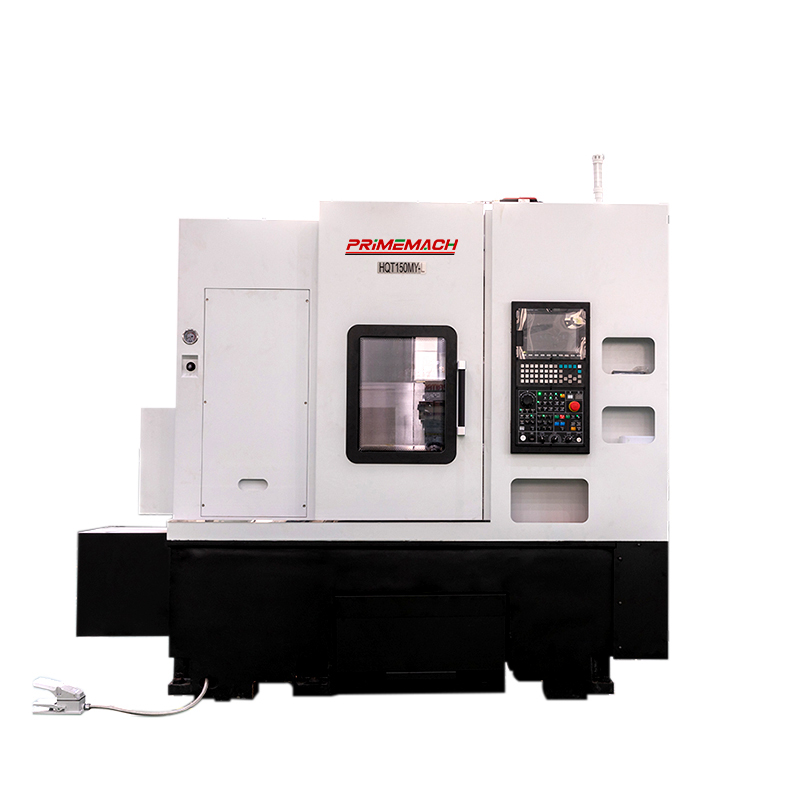
Selecting the right machine requires strict technical evaluation. You must analyze torque versus speed capabilities carefully. Evaluate spindle power specifically for low-RPM, high-torque cutting. High top-end RPM matters less for heavy defense work. Defense-grade alloys require immense rotational force to remove material efficiently. Metal Turret Lathes in Defense Equipment must power through armor-grade steel without stalling.
Next, assess turret capacity and live tooling options. You must determine if a 10-station or 12-station turret fits your needs. Component complexity dictates this choice. Live tooling capabilities are absolutely critical for modern defense parts. They allow for off-center drilling and milling. You never have to move the part to a separate mill. This preserves zero-point accuracy.
Coolant and chip management demand close attention. Heavy material removal generates massive heat. It also produces large volumes of stringy chips. Evaluate high-pressure through-tool coolant systems closely. These systems blast chips away from the cutting zone. They are critical for deep-hole drilling in munition components. Heat buildup will destroy your tools otherwise.
Finally, confirm automation readiness. Look for bar feeder compatibility. Evaluate robotic part-catcher integration options. These features support lights-out manufacturing. High-volume defense contracts require continuous, unattended production to remain profitable.
Table 2: Coolant Pressure Requirements by Defense Material | ||
Material Type | Application Example | Recommended Coolant Pressure |
|---|---|---|
Titanium (Ti-6Al-4V) | Aerospace Landing Gear | 1000 - 1500 PSI |
Inconel 718 | Missile Engine Housings | 1500 - 2000 PSI |
Armor-Grade Steel | Vehicle Ballistic Plating | 800 - 1200 PSI |
Aluminum 7075 | Weapon Receivers | 300 - 500 PSI |
Deploying heavy-duty machinery involves real-world logistical challenges. High-rigidity lathes demand substantial floor space. They often require reinforced concrete foundations. These foundations absorb harmonic vibrations during heavy cuts. They keep micron-level tolerances intact over time. You must consult structural engineers before installation.
The learning curve presents a temporary hurdle. Transitioning operators from standard CNC lathes requires time. Twin-turret, multi-axis programming is highly complex. It demands dedicated CAM software training. You must also perform rigorous post-processor validation before cutting actual metal. Simulation software prevents catastrophic machine crashes.
Follow these best practices for smooth operator adoption:
Invest in off-line CAM simulation training before the machine arrives.
Pair experienced machinists with OEM application engineers during setup.
Develop standardized tool libraries within your CAM software.
Start production on simpler parts to build operator confidence.
Integration with compliance systems is another critical step. Machine telemetry must integrate with existing ERP/QMS software. Defense contracts demand strict traceability. You must track tool life, part dimensions, and material lots automatically. Manual data entry leads to audit failures.
Maintenance overhead increases with machine complexity. Turret alignment checks must occur regularly. Spindle runout calibrations must be scheduled rigorously. These preventative measures stop tolerance drift. Minor collisions can misalign turrets slightly. You must catch these issues before they cause scrap.
Choosing between new and retrofitted equipment shapes your procurement strategy. A used metal turret lathe offers faster lead times. It requires lower upfront capital. However, defense contractors must weigh these benefits against severe risks. Used machines often lack modern telemetry. They may suffer from hidden turret wear. The absence of an OEM warranty poses a major financial risk.
Vendor support and parts availability must drive your decision. In defense production, machine downtime is simply unacceptable. Prioritize OEMs who offer localized service technicians. Demand guaranteed spare parts availability within 24 hours. A cheap machine becomes incredibly expensive if it sits idle for weeks awaiting repairs.
Your next-step action involves data-driven validation. Conduct a thorough time-study analysis. Provide a prospective machine builder with a complex defense component drawing. Execute a Non-Disclosure Agreement (NDA) first. Ask them to run a cycle-time simulation. Compare their turret lathe performance against your current internal processes. This proves the exact efficiency gains before purchase.
Metal turret lathes transform defense manufacturing entirely. They evolve production from a multi-step, high-risk process into a streamlined operation. You gain a highly repeatable system capable of handling extreme alloys. They eliminate idle times and slash scrap rates simultaneously.
Focus your evaluation on three main pillars. Check machine rigidity for heavy material removal. Verify multi-tool capabilities for complex geometries. Prioritize operator training requirements to ensure a smooth deployment. These steps protect your investment and improve your capabilities.
Take action today to optimize your production lines. Contact our application engineering team immediately. Request a detailed cycle-time estimate and capability study. We will analyze your specific defense components and recommend the perfect turning solution.
A: Capstan lathes feature a turret mounted on a short slide (ram). They are ideal for lighter, faster work. A true turret lathe mounts the turret directly on the saddle. This design provides the extreme rigidity required for heavy cuts on defense-grade superalloys.
A: It allows two cutting tools to engage the workpiece simultaneously. Operators can also perform operations on both the main and sub-spindle at once. This parallel processing often reduces overall cycle times by 30-40% on complex defense parts.
A: Yes, they are highly suitable. The facility must utilize quick-change tooling systems properly. Implementing modular workholding is also necessary. These strategies minimize setup times drastically when switching between different component runs.
A: Turret index misalignment from minor collisions is a top risk. Chip build-up in the coolant delivery systems causes overheating issues. Regular preventative maintenance and utilizing proper chip conveyors mitigate these risks effectively.


