

Views: 0 Author: Site Editor Publish Time: 2026-01-22 Origin: Site


Ever wondered how complex parts are made with extreme precision? The answer lies in CNC lathes—machines that automate turning, drilling, and shaping. These machines transform designs into high-quality parts. In this article, we'll discuss how CNC lathes work, their benefits, and the different types available. You will learn how these machines are crucial for industries like automotive and aerospace.
A CNC (Computer Numerical Control) lathe is an advanced machine tool that is used to shape materials through precision turning operations. Unlike traditional lathes, which are manually operated, CNC lathes are automated and controlled by a computer using programmed instructions. These machines are widely used in industries for manufacturing parts that require intricate shaping, cutting, and drilling.
CNC lathes operate by rotating the workpiece while a cutting tool is applied to the surface, shaping it according to the design. The machine's movements are controlled by G-code, which specifies the exact motions and cutting parameters required to create precise parts.
Key Features of a CNC Lathe:
● Computer Control: The operation is controlled by a computer, improving accuracy and consistency.
● Multiple Axes: CNC lathes often have multiple axes (2 to 5+), allowing for complex movements and operations.
● High Precision: Capable of machining parts with tolerances as tight as ±0.0005 inches (±0.0127 mm).
● Automation: CNC lathes reduce the need for manual intervention, speeding up production and reducing human error.
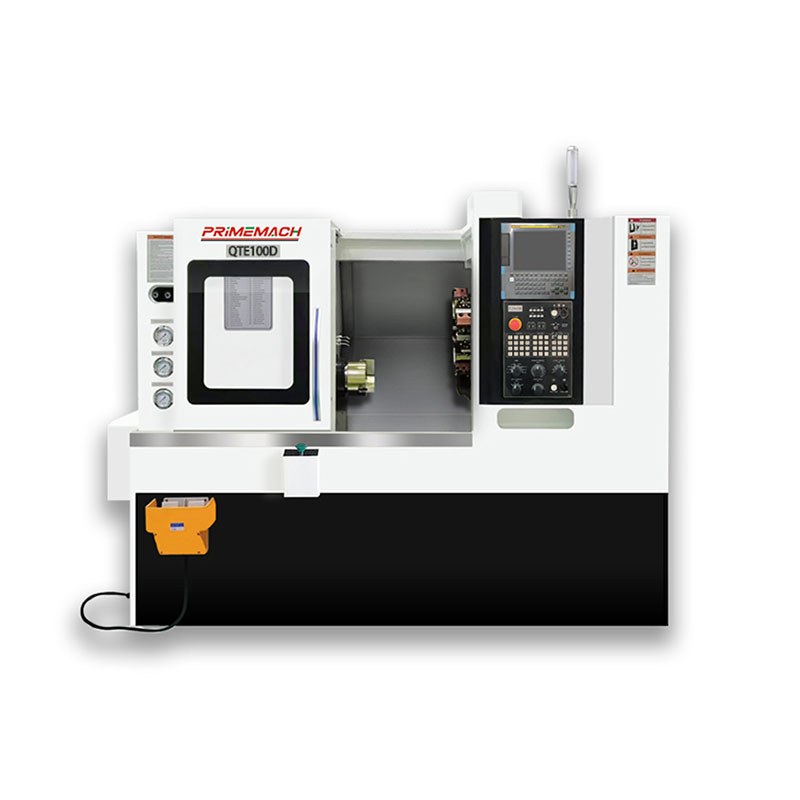
CNC lathes provide significant advantages over manual lathes, making them indispensable in modern manufacturing. Here are some of the key benefits:
● Increased Precision: CNC lathes produce parts with much higher accuracy and repeatability. The precision control of cutting tools ensures that each part is identical to the last, which is crucial for mass production.
● Higher Speed and Efficiency: CNC lathes can operate 24/7 with minimal human intervention, resulting in faster production times and reduced labor costs.
● Complex Operations: They can perform multiple operations in one cycle (e.g., turning, milling, drilling, and threading), which saves time and streamlines workflows.
● Reduced Human Error: Automated control and programming minimize the risks of mistakes, resulting in higher-quality products.
Key Benefits Summary:
Benefit | Description |
Precision | Achieves high precision with minimal variance. |
Speed | Faster production and reduced human involvement. |
Complexity | Capable of performing multiple operations in one setup. |
Reduced Error | Automated programming and control reduce mistakes. |
CNC lathes and manual lathes serve the same fundamental purpose — shaping materials — but their operations are quite different. Here's how they compare:
1. Control System:
a. CNC Lathes: Operated by a computer, the movement of the workpiece and cutting tools is precisely controlled by G-code.
b. Manual Lathes: Controlled manually by the operator, requiring more hands-on skill to achieve desired results.
2. Precision and Consistency:
a. CNC Lathes: Offer high levels of precision with tight tolerances, ensuring uniformity across all parts.
b. Manual Lathes: Precision is dependent on the operator's skill, which can lead to inconsistencies between parts.
3. Speed and Efficiency:
a. CNC Lathes: Can perform multiple tasks in one cycle and run continuously, improving efficiency and reducing production time.
b. Manual Lathes: Slower operations as each process requires manual setup and adjustment.
Comparison Summary:
Feature | CNC Lathe | Manual Lathe |
Control | Computer-controlled (G-code) | Operated by the operator |
Precision | High precision, consistent parts | Depends on operator skill |
Speed | Faster, continuous operation | Slower, requires manual setups |
Efficiency | High efficiency, reduced downtime | Lower efficiency, higher labor |
The development of CNC technology can be traced back to the 1940s and 1950s when the need for more accurate and automated machining arose, especially in industries like aerospace. Early CNC machines were based on the concept of numerical control (NC), which used punched cards to control the movement of machine tools.
The real breakthrough came when computers were introduced into the process, allowing for greater flexibility, control, and precision. This evolution was instrumental in the transition from manual to automated machining systems.
Two pioneers in CNC technology, John T. Parsons and Frank L. Stulen, played critical roles in the development of the first CNC machines. They are credited with creating the first numerically controlled machine tools in the 1940s, which eventually evolved into the sophisticated CNC lathes we use today. Their contributions laid the foundation for modern automation in manufacturing, especially in the aerospace industry.
Over the years, CNC lathes have evolved from basic machines that could only perform turning operations to highly advanced systems capable of multi-axis milling, drilling, and threading. Today’s CNC lathes are equipped with features like automatic tool changers, sophisticated control panels, and advanced software integration.
This evolution has enabled industries to manufacture increasingly complex parts with high precision, reducing human intervention and enhancing production efficiency.
Before a CNC lathe can begin machining, the design must first be created using CAD (Computer-Aided Design) software. This process allows engineers and designers to visualize the part and its dimensions. Once the design is complete, it is converted into a G-code, a programming language that CNC machines understand. This code instructs the CNC lathe on how to move, which tools to use, and how to shape the material to match the exact specifications.
● CAD Design: Engineers use CAD software (e.g., SolidWorks, AutoCAD) to create detailed digital designs of the parts.
● G-code Translation: The CAD design is then translated into G-code, a series of instructions that guide the CNC machine through the entire process.
● Tool Path Planning: The tool path for each machining operation is defined in the G-code to ensure the cutting tool follows the right path for each part.
Tool Path Example:
Operation Type | Tool Path Description | Tool Movement |
Facing | Cutting a flat surface on the workpiece | Tool moves along X-axis for flat surface |
Drilling | Creating holes in the workpiece | Tool moves along Z-axis into the material |
Grooving | Cutting a groove along the workpiece | Tool moves in both X and Z axes to form groove |
Once the design and programming are complete, the CNC lathe needs to be set up for operation. This involves preparing the workpiece and ensuring the right tools are in place. Proper setup is crucial to achieving high-quality results and avoiding mistakes during the machining process.
● Securing the Workpiece: The workpiece is securely mounted on the chuck, a device that holds the material steady as the CNC lathe rotates it.
● Selecting the Tools: The tool turret, which holds various cutting tools, is programmed to bring the correct tool into position depending on the operation (e.g., turning, drilling).
● Initial Test Run: A dry run (without material) is often performed to check the tool movements and ensure everything is set up correctly.
Setup Example:
● Workpiece is mounted on the chuck with a tailstock for added stability, especially for longer parts.
● Tool turret is loaded with turning, drilling, and boring tools for different operations.
The CNC lathe’s main advantage lies in its ability to perform continuous operations with high precision, but real-time monitoring and adjustments are still essential. As the machine operates, it monitors various factors such as cutting speed, tool wear, and part alignment to ensure that the workpiece is being machined accurately.
● Real-Time Adjustments: If the machine detects any issues (e.g., incorrect speed, tool wear), it makes immediate adjustments to maintain accuracy.
● Quality Checks: After machining, the part is inspected for adherence to the design specifications. In many CNC lathes, this is done automatically using advanced sensors and vision systems.
Monitoring Features:
Feature | Description |
Tool Wear Detection | Identifies when tools are wearing down, prompting automatic tool changes. |
Cutting Speed Adjustment | Modifies the speed for optimal cutting based on material and tool conditions. |
On-the-Fly Error Correction | Ensures precise machining by adjusting tool paths during operation. |
At the heart of every CNC lathe is the main spindle, where the workpiece is mounted and rotated. The spindle is powered by a high-torque motor and operates at varying speeds based on the machining requirements. The chuck is the device that holds the workpiece in place on the spindle, ensuring it remains steady throughout the machining process.
● Main Spindle: The rotating component that drives the workpiece. It is often adjustable to cater to different machining speeds and materials.
● Chuck: A clamping device that securely holds the workpiece. It can come in different forms, such as a 3-jaw or 4-jaw chuck, depending on the size and shape of the material.
The tailstock and tool turret are critical in supporting and guiding the workpiece and cutting tools.
● Tailstock: Located at the opposite end of the spindle, the tailstock is used to provide additional support to longer workpieces, especially when they are being machined for high precision.
● Tool Turret: This rotating device holds various cutting tools that can be quickly accessed during different stages of machining. The tool turret significantly reduces downtime by eliminating the need for manual tool changes.
Tailstock and Turret Features:
Component | Role |
Tailstock | Provides stability for longer workpieces, reduces vibration. |
Tool Turret | Holds multiple tools for quick changeover between operations. |
The CNC controller is the brain of the machine, interpreting the G-code and translating it into precise instructions for the lathe. The carriage is the component that moves along the bed, guiding the cutting tool along the workpiece to perform the necessary cuts.
● CNC Controller: The interface where the operator inputs the programming and operates the machine. It is responsible for coordinating all movements and operations.
● Carriage: Moves the cutting tool along the X, Y, and Z axes to perform tasks like turning and boring. The carriage’s movements are critical in maintaining precise control over the machining process.
During the machining process, coolant systems and chip conveyors play essential roles in maintaining operational efficiency and product quality.
● Coolant System: Delivers coolant to the cutting area to keep the tools cool and prevent overheating. It also helps remove chips from the workpiece and tool.
● Chip Management: A chip conveyor system removes debris produced during the machining process, keeping the workspace clean and ensuring that the cutting tools stay sharp and effective.
Coolant and Chip Management Features:
Component | Role |
Coolant System | Reduces heat, extends tool life, and improves cutting performance. |
Chip Conveyor | Removes metal chips to maintain clean work area and prevent tool damage. |
A 2-axis CNC lathe is the simplest type of CNC lathe, primarily used for basic turning operations. It operates on two linear axes: the X-axis, which controls the movement of the tool in and out (radially), and the Z-axis, which controls the longitudinal movement of the tool along the workpiece.
Key Benefits:
● Simplicity: Ideal for creating basic cylindrical parts such as rods, shafts, and simple rings.
● Efficiency: Perfect for high-volume production of symmetrical, uniform parts.
● Cost-Effective: A budget-friendly option for simple machining tasks.
Common applications include turning, facing, drilling, and grooving, especially for parts that do not require intricate features.
The 3-axis CNC lathe expands on the 2-axis model by adding a Y-axis, which allows for more complex machining operations. This extra axis enables the lathe to perform off-center milling and other intricate tasks that a 2-axis lathe cannot.
Key Benefits:
● Versatility: Capable of producing more complex parts, including those with non-cylindrical profiles.
● Precision: Allows for off-center milling, making it suitable for a wider variety of applications.
● Increased Production Capabilities: With the addition of the Y-axis, the lathe can perform more operations in a single setup.
Typical uses include advanced turning, off-center milling, and multi-tasking operations that require precision and flexibility.
4-axis and 5-axis CNC lathes bring enhanced capabilities, adding rotational axes to the tool or workpiece for greater flexibility. The C-axis in 4-axis lathes provides rotational movement of the workpiece, while 5-axis machines allow for complex operations involving both the tool and the workpiece at multiple angles.
Key Benefits:
● Multi-Tasking: Perform complex operations like turning and milling in one setup.
● Complex Geometries: Ideal for manufacturing aerospace, automotive, and medical components with intricate features.
● Increased Productivity: Reduces the need for multiple machines and setups, saving time and increasing throughput.
Applications include advanced aerospace components, complex automotive parts, and intricate medical devices that require precise, multi-angle machining.
The 6+ axis CNC lathe is the most advanced in the CNC lathe family, offering unmatched flexibility and precision. These machines manipulate both the workpiece and tool in multiple directions simultaneously, making them ideal for highly complex geometries and tight tolerances.
Key Benefits:
● Extreme Precision: Capable of achieving the tightest tolerances required for critical industries like aerospace, medical, and defense.
● Maximum Flexibility: Allows for sophisticated machining processes, creating highly detailed and intricate parts.
● Reduced Setups: Capable of performing several operations in one go, minimizing the need for multiple machines.
Applications include ultra-precise aerospace parts, defense components, and small, complex medical implants. These machines are used in industries where failure is not an option and parts require the highest possible quality.
The primary operation on a CNC lathe is turning, where material is removed from a rotating workpiece using a cutting tool. The facing operation is closely related, where the cutting tool removes material from the end of the workpiece to create a flat surface.
● Turning: Commonly used to create cylindrical parts like shafts, rods, and pipes.
● Facing: Often done to create a smooth, flat surface on the ends of the workpiece or along its length.
These operations are ideal for industries like automotive manufacturing, where high-volume production of cylindrical components is required.
CNC lathes are versatile and capable of performing operations like drilling, boring, and threading. These are essential for creating holes, enlarging them to specific diameters, and cutting threads on the workpiece.
● Drilling: Creating precise holes in the workpiece.
● Boring: Enlarging pre-drilled holes to achieve the desired size and smoothness.
● Threading: Cutting internal or external threads, often required for screws, bolts, and fittings.
These operations are commonly used in industries such as manufacturing, construction, and automotive, where threaded parts and accurate hole sizes are essential.
Additional operations that can be performed on CNC lathes include grooving, knurling, and parting. These are typically used for specialized surface finishes or separating parts.
● Grooving: Cutting grooves along the length of the workpiece for functional or aesthetic purposes.
● Knurling: Creating a textured pattern on the workpiece, commonly used on handles or grips for better traction.
● Parting: Separating parts from the main workpiece, commonly used when finishing a part.
These operations are crucial in industries that require detailed surface features or the ability to separate finished parts from a larger workpiece.
Many modern CNC lathes integrate milling capabilities, especially in multi-axis models. This allows for turning and milling operations to be completed in one machine, reducing production time and eliminating the need for a separate milling machine.
● Off-Center Milling: When the part requires milling at an angle or on an irregular surface.
● Simultaneous Turning and Milling: Performing both turning and milling operations on the same part in one setup for greater efficiency.
Industries like aerospace, automotive, and medical manufacturing benefit from these capabilities, as they allow for more complex parts to be created in fewer steps, improving both speed and precision.
CNC lathes are integral to modern manufacturing, providing precision and speed. Anhui Primacon Intelligent Equipment Co., Ltd. offers cutting-edge CNC lathes that streamline production. Their high-quality machines provide exceptional precision, making them ideal for various industries.
A: A CNC lathe is a computer-controlled machine used for turning, drilling, and shaping parts with high precision. It automates the machining process, making it faster and more accurate than manual lathes.
A: CNC lathes work by rotating a workpiece while a cutting tool is applied to shape it according to a programmed design. The machine follows G-code instructions for precise operations.
A: CNC lathes offer increased precision, higher production speed, and reduced human error. They allow for complex part designs and can operate continuously with minimal supervision.
A: CNC lathes range in price depending on their size and complexity, from around $20,000 for entry-level models to over $500,000 for high-end, multi-axis machines.
A: CNC lathes are widely used in industries like aerospace, automotive, medical, and manufacturing for producing high-precision parts and components.


