


Are you curious about how CNC lathes have revolutionized modern manufacturing? In this article, we will explore what CNC lathes are, how they work, and their critical role in various industries. You will also learn about their advantages, including precision, speed, and safety features.
A CNC lathe is a computer-controlled machine designed to precisely shape materials through rotating motion and the use of cutting tools. These machines are essential for automated manufacturing, offering high precision and efficiency in tasks such as turning, drilling, boring, and thread cutting.
Unlike traditional manual lathes, where the operator physically controls the machine, CNC lathes follow specific programs stored in their computerized control system. The key advantage here is repeatability—once programmed, the machine can produce parts with identical specifications, which is critical in industries where accuracy is paramount.
CNC lathes use a rotating workpiece and a stationary cutting tool that shapes the material. The machine follows instructions from G-code, a set of programmed commands, to control the movement of the tool and workpiece. The cutting tool moves along the X, Y, and Z axes, making precise adjustments to the material.
Here's how it typically works:
1. Loading the Program: The CNC machine receives its programming instructions, often written in G-code.
2. Workpiece Setup: The material is securely placed in the machine's chuck, which rotates during the operation.
3. Cutting Process: The machine executes precise cutting operations based on the coded instructions.
G-code (Geometric code) is the standard programming language used to control CNC machines. It tells the machine where and how to move, including:
● Movement direction (X, Y, Z axis)
● Speed and feed rates
● Tool selection
● Spindle control
On the other hand, M-code controls machine functions, such as:
● Spindle start/stop
● Tool changes
● Coolant activation
Each CNC lathe is tailored with its own set of G-code and M-code requirements, depending on the manufacturer, ensuring precise control over the operation.
Horizontal CNC lathes are ideal for large workpieces that require robust cutting capabilities. With the spindle mounted horizontally, these machines offer stable cutting performance and are typically used in industries like automotive and aerospace to manufacture large components such as axles or rotors. Their setup is designed for durability, handling high cutting forces without compromising on precision.
Vertical CNC lathes feature a vertical spindle orientation, making them perfect for smaller, precision parts. They excel in tight spaces and complex geometries, especially for industries requiring intricate parts like valve bodies, flanges, and connectors. Their vertical configuration ensures ease of part loading and unloading.
CNC Swiss lathes specialize in the production of small, highly precise parts, often seen in the medical or electronics industries. The sliding headstock and tooling system of these lathes enable the creation of intricate components with excellent surface finishes. Swiss lathes are particularly effective for creating high-volume and high-precision parts, such as medical implants or electrical connectors, where tight tolerances are crucial.
Type of CNC Lathe | Best For | Common Uses |
Horizontal CNC Lathe | Large workpieces, robust cutting | Automotive parts, aerospace components |
Vertical CNC Lathe | Smaller, precise parts | Valve bodies, flanges, connectors |
CNC Swiss Lathe | Small, high-precision parts | Medical implants, electrical connectors |
CNC lathes are widely recognized for their high precision and repeatability, which are essential in industries like aerospace and automotive. These machines are designed to operate with extreme accuracy, making them ideal for producing complex parts that require tight tolerances.
Primacon’s CNC lathes are especially known for their exceptional quality, delivering reliable results across various applications. The precision built into Primacon CNC lathes ensures that every part produced meets industry standards, whether it’s for aircraft components or engine parts.
● High precision allows for the creation of intricate geometries.
● Repeatability ensures that each part is identical to the last, minimizing waste and errors.
The advent of CNC lathes has revolutionized manufacturing by automating processes that were previously done manually. With CNC lathes, manufacturers can now produce high-volume parts with reduced human error and less waste. These machines are controlled by advanced software, which automates the cutting, shaping, and finishing processes, ensuring consistent quality in every production run.
The key benefits of automation in CNC lathes are:
● Reduced labor costs: CNC machines operate without requiring constant human intervention.
● Higher throughput: Faster production cycles mean that manufacturers can produce more parts in less time.
● Consistency: CNC lathes guarantee that each piece will have identical dimensions, even over long production runs.
One of the standout features of CNC lathes, particularly Primacon CNC lathes, is their versatility. These machines are equipped to handle a wide range of materials, including metals, plastics, and composites, making them suitable for numerous industries. From automotive manufacturing to medical device production, CNC lathes offer unparalleled flexibility in meeting the diverse demands of different sectors.
Materials commonly processed by CNC lathes:
● Metals: Aluminum, steel, titanium
● Plastics: ABS, polycarbonate, PEEK
● Composites: Carbon fiber, fiberglass
This versatility allows manufacturers to shift between different projects and materials without needing multiple machines, making CNC lathes an ideal choice for companies looking to optimize their operations.
CNC lathes play a critical role in the automotive industry, where precision and efficiency are paramount. Parts like engine components, shafts, and brackets are all made using CNC lathe machines, ensuring each part meets stringent performance and safety standards. The repeatability of CNC lathes allows automotive manufacturers to produce large volumes of high-precision parts consistently.
In the aerospace sector, CNC lathes are used to create complex components like engine parts, turbine blades, and landing gear components. Given the critical nature of these parts, CNC lathes must deliver uncompromising precision and reliability. Primacon CNC lathes excel in this area, offering machines that ensure parts can withstand the high stresses and extreme conditions they face.
Medical devices require components that are extremely precise. CNC lathes are used in the production of surgical tools, implants, and medical equipment. These machines offer the necessary accuracy for tasks such as creating stents, prosthetics, and catheters, where a fractional deviation in measurements can impact the safety of the end user. Primacon CNC lathes are engineered to meet the rigorous standards demanded in the medical field.
Turning is the fundamental operation in CNC lathe machines. It involves the rotation of the workpiece while a cutting tool is used to shape the material. This operation can produce a smooth, precise surface on the material, making it essential for parts that require a clean finish.
Facing is another common operation, which is used to create a flat surface at the end of the workpiece, ensuring a precise fit with other components. Both turning and facing are key to achieving the desired dimensions and surface finishes on a part.
Thread cutting is an essential operation for creating threaded components, such as bolts, screws, and fasteners. CNC lathes can cut internal or external threads with high accuracy, meeting specific thread standards like UN, metric, or BSP. The precision of CNC lathes ensures that the threads produced fit perfectly and have the desired strength and durability.
CNC lathes also support drilling and boring operations, which involve creating holes in parts with high accuracy. Drilling typically involves making small holes, while boring is used to enlarge and finish existing holes to specific diameters. These operations are essential for applications that require tightly controlled dimensions and smooth finishes, such as hydraulic components and bearing housings.
CNC Lathe Operation | Function | Common Uses |
Turning | Rotating the workpiece with a stationary cutting tool | Shaping cylindrical parts |
Facing | Creating a flat surface at the workpiece's end | Preparing parts for assembly or joining |
Thread Cutting | Cutting threads on internal or external surfaces | Manufacturing bolts, screws, and fasteners |
Drilling | Making holes in parts | Creating holes for shafts or fasteners |
Boring | Enlarging and finishing holes | For parts with tight tolerances and smooth finishes |
CNC lathes are the cornerstone of precision manufacturing. These machines are widely preferred for producing complex parts with tight tolerances, making them an essential tool in industries like aerospace, automotive, and medical device manufacturing. The ability of CNC lathes to consistently produce parts with exact dimensions, even during high-volume production, sets them apart from traditional methods.
Primacon CNC lathes are specifically designed to provide repeatable accuracy. By eliminating human error and ensuring that every part is produced according to a precise program, these machines guarantee a high-quality output across long production runs. Whether producing small intricate components or large mechanical parts, Primacon CNC lathes offer exceptional reliability in meeting high-precision requirements.
● High precision ensures consistency across multiple parts.
● Capable of handling complex geometries without sacrificing quality.
● Repeatability ensures that each part matches the previous one with minimal variation.
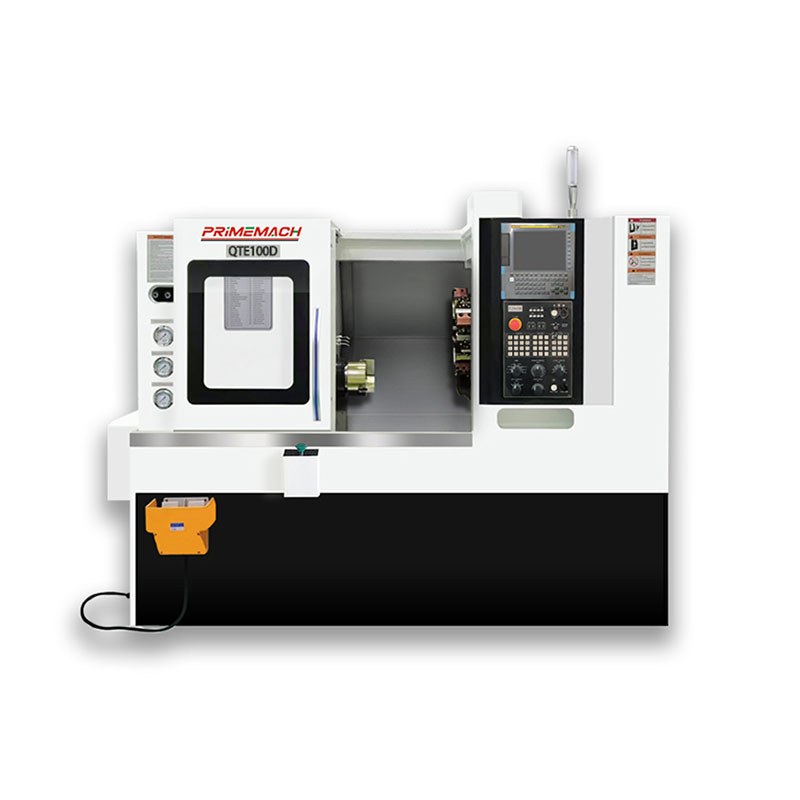
The automation capabilities of CNC lathes significantly enhance production speed. With computerized control systems, these machines can operate continuously, reducing the need for manual intervention and thereby minimizing downtime. CNC lathes also excel at fast tool changes, which means production cycles are faster, and overall production time is reduced.
For mass production, this speed increase is especially critical. Primacon CNC lathes, with their automated functions, streamline the manufacturing process. Parts can be produced at a much faster rate than manual methods while maintaining high-quality standards. This efficiency not only saves time but also lowers production costs, benefiting companies aiming for both speed and accuracy.
Key benefits of increased production speed:
● Reduced cycle times: CNC lathes can produce parts faster than manual machines.
● Increased throughput: With automated processes, more parts are produced in less time.
● Cost-effective mass production: Faster production times lead to lower overall manufacturing costs.
Safety is a top priority in any manufacturing process, and CNC lathes come equipped with several features that minimize risks to operators. Primacon CNC lathes are specifically designed with automated tool changes, which reduce the need for manual handling of sharp tools and thus lower the risk of injury. The machine’s protection shields further safeguard the operator by covering the cutting area and preventing debris from flying out during high-speed operations.
The safety features integrated into Primacon machines ensure that operators can focus on monitoring the process instead of being involved in potentially hazardous actions. These features also help meet safety standards set by regulatory authorities, ensuring that the operation remains compliant with industry safety protocols.
Safety mechanisms include:
● Automated tool changes reduce operator involvement with sharp tools.
● Protection shields prevent debris and fragments from flying out.
● Emergency stop functions are easily accessible, allowing for quick shutdown in case of malfunction.
Feature | Benefit | Impact |
Automated Tool Changes | Reduces operator interaction with sharp tools | Increases safety and reduces the risk of injury |
Protection Shields | Covers the cutting area to prevent flying debris | Protects operators from flying fragments |
Emergency Stop Function | Quick shutdown in case of malfunction | Enhances operational safety |
When choosing a CNC lathe, it’s important to consider the materials you will be working with. Different CNC lathes are designed to handle various materials such as metals, plastics, and composites. For example, Primacon CNC lathes are equipped to process both hard metals like steel and titanium as well as softer materials such as aluminum and plastics. If your production involves different materials, a versatile machine that can be easily adjusted for various material types is key to maximizing efficiency.
Here’s a breakdown of material compatibility:
● Metals: Steel, aluminum, titanium
● Plastics: ABS, polycarbonate, PEEK
● Composites: Carbon fiber, fiberglass
The right CNC lathe should be able to meet the demands of your material processing needs while ensuring that it can handle the cutting speeds, tooling, and precision required for those materials.
Another critical consideration is ensuring that the CNC lathe fits within your workspace. Machine size and footprint can vary depending on the model and its capabilities. It’s essential to assess the available shop space and the dimensions of the machine before purchasing.
Primacon offers a variety of CNC lathes with different sizes to meet specific production needs. Whether you need a compact machine for small parts or a larger model for heavy-duty applications, making sure that the lathe fits comfortably within your workspace is crucial for maximizing efficiency.
Consider these factors when evaluating machine size:
● Shop space availability
● Part size requirements: Ensure the machine can accommodate your largest parts.
● Ease of setup: Ensure the machine is easy to move or install if needed.
The production volume you intend to achieve plays a big role in choosing the right CNC lathe. If your focus is on high-volume manufacturing, you will need a machine that can handle continuous, long production runs without compromising on accuracy or speed. Primacon CNC lathes are designed for mass production, equipped with automation features like quick tool changes and multi-tasking capabilities, which allow them to meet the demands of high-volume projects.
For smaller batch production or high-precision parts, a more compact and flexible CNC lathe may be the better choice. These machines often come with specialized features that allow for intricate and customized part production.
The price of a CNC lathe varies widely depending on factors such as machine size, features, and precision capabilities. Primacon offers competitive pricing for both high-end and budget-friendly models, catering to various needs across industries. While high-end CNC lathes offer advanced features, such as multi-axis capabilities and automated systems, more affordable models may lack these features but still provide excellent precision and performance for smaller tasks.
When budgeting for a CNC lathe, you need to consider more than just the initial price:
● Machine Price: The base cost of the machine itself.
● Tooling Costs: CNC lathes require specific tools and attachments that add to the cost.
● Software: Many CNC lathes require special software to program and run, which can add to the overall expense.
● Maintenance and Upkeep: Regular maintenance is essential to ensure the longevity of your machine, and this should be factored into the budget.
Here's a rough breakdown of costs:
Cost Factor | Description |
Machine Price | The base cost of the CNC lathe. |
Tooling Costs | The cost of necessary cutting tools and attachments. |
Software | Programming software to operate the CNC lathe. |
Maintenance | Regular maintenance, service plans, and spare parts. |
CNC Lathes are essential for modern manufacturing, providing precision, efficiency, and reliability. Anhui Primacon Intelligent Equipment Co., Ltd. offers high-quality CNC lathes that meet the demands of various industries. Their machines are known for repeatable accuracy and cost-effective solutions, ensuring excellent value for businesses worldwide.
A: A CNC lathe is a computer-controlled machine used to precisely shape and cut materials, such as metal, plastic, and wood. It automates turning, drilling, and other processes for high precision.
A: CNC lathes work by rotating the material against a stationary tool guided by a computer program, ensuring precise cuts and accurate dimensions, ideal for high-volume manufacturing.
A: CNC lathes offer increased precision, repeatability, and automation, reducing human error and improving production efficiency, making them essential for high-precision industries.
A: CNC lathes can process a variety of materials, including metals (steel, aluminum), plastics (ABS, PEEK), and composites (carbon fiber), making them versatile for different industries.
A: The cost of a CNC lathe varies based on features and size. Prices typically range from a few thousand to several hundred thousand dollars, depending on the machine's capabilities and customization options.


