

Views: 0 Author: Site Editor Publish Time: 2026-02-02 Origin: Site


Ever wondered how CNC metal lathes transform raw materials into precision parts? These machines are essential in industries like aerospace and automotive. In this article, we will explore how CNC metal lathes work, from their basic components to the complex processes they perform. You'll learn about their uses, key features, and what to consider when choosing the right CNC lathe for your needs.
What is a CNC Metal Lathe?
A CNC metal lathe is a precision machine tool used in automated machining operations. It uses Computer Numerical Control (CNC) technology to shape and cut materials with high accuracy, transforming them into detailed parts. The beauty of CNC metal lathes lies in their ability to execute complex tasks with minimal human intervention, offering repeatability and consistency for high-volume production.
The CNC lathe’s operation revolves around rotating a workpiece while a stationary cutting tool removes material according to programmed specifications. This process is ideal for parts that require intricate details, such as shafts, gears, or any cylindrical components. CNC lathes excel at creating smooth surfaces and precise finishes, ensuring the highest quality in manufacturing.
Primacon’s CNC lathes integrate cutting-edge technologies from both Germany and Japan, making them leaders in the market. These lathes cater to various industries, such as mold production, automotive manufacturing, and aerospace, where precision is critical. By leveraging advanced automation, Primacon’s CNC machines guarantee efficient and high-quality outputs.
Industry | Application of CNC Lathes |
Automotive | Manufacturing of precision automotive parts |
Aerospace | Machining of critical aerospace components |
Mold Production | Creation of molds with high tolerance precision |
General Manufacturing | Mass production of cylindrical parts |
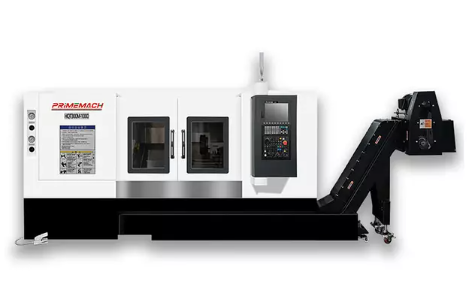
CNC metal lathes differ significantly from traditional manual lathes. In manual lathes, the operator’s skill and effort drive the machine's operations, making manual adjustments during machining. The results depend largely on the operator’s expertise and ability to maintain accuracy over long production runs.
On the other hand, CNC technology automates these processes, ensuring unmatched precision by following pre-programmed instructions. This automation reduces the risk of human error, which can be critical, especially in industries like aerospace, where exact tolerances are essential.
Here’s a comparison table to highlight key differences:
Aspect | CNC Metal Lathes | Manual Lathes |
Control | Computer-controlled, precise, automated | Operator-controlled, based on skill |
Precision | High precision with minimal error | Relies on operator’s consistency |
Speed | Faster due to automation and repeatability | Slower and dependent on operator’s pace |
Flexibility | Handles complex designs with ease | Limited to simple tasks |
Human Error | Minimal, as the machine adjusts automatically | High, as accuracy is dependent on the operator |
CNC (Computer Numerical Control) technology enables machines like CNC metal lathes to carry out precise operations automatically. Unlike traditional machines, where operators manually adjust controls, CNC metal lathes follow pre-programmed instructions, ensuring consistency and high precision in every cycle.
● Automation: The process is fully automated, reducing human error and increasing production speed.
● Precision: CNC technology allows for highly detailed and accurate machining, even for complex shapes.
● Consistency: The machine replicates the exact same operations repeatedly, ensuring uniform quality across all parts.
CNC Technology Benefits | Description |
Automation | Reduces need for manual input and speeds up production. |
Precision | Achieves high accuracy in machining parts. |
Consistency | Replicates the same process with minimal variation. |
CNC programming involves translating a design into machine-readable instructions. This process starts with CAD (Computer-Aided Design) software, where a detailed part design is created. The design is then converted into G-code, a language understood by CNC lathes.
● CAD Software: Designers create a 3D model of the part, ensuring all dimensions and features are included.
● G-code: This code tells the CNC machine exactly how to move the cutting tools along various axes, including speed, depth, and tool changes.
CNC Programming Process | Description |
CAD Design | Create the part’s design with specific dimensions. |
G-code Conversion | Convert the CAD file into machine-readable G-code. |
Toolpath Generation | Plan and optimize the movement of cutting tools. |
Through CNC programming, CNC metal lathes can execute a range of tasks, from simple cuts to complex machining operations, with unparalleled precision.
The design phase is the foundation of the CNC machining process. In this stage, CAD (Computer-Aided Design) software is used to create a detailed model of the part. Designers input the exact dimensions, features, and specifications required for the final part.
● CAD Software: Allows for precise and intricate designs that CNC lathes will later execute.
● Primacon CNC machines are equipped to handle complex designs, especially in industries like automotive and aerospace, where high accuracy and intricate geometry are critical.
Design Tools | Description |
CAD Software | Design the part with precision and clarity. |
Primacon CNC Machines | Handle complex designs with high precision. |
Once the design is completed, the next step is to convert it into G-code, the programming language that CNC lathes understand. This involves programming the machine to follow the design’s specifications, including tool movement, spindle speed, and cutting depth.
● The G-code directs the CNC machine’s movements, guiding the cutting tool and rotating the workpiece accordingly.
● CNC lathe setup includes configuring the cutting tools and securely attaching the workpiece to the lathe.
With the machine setup and G-code ready, the actual machining process begins. The CNC metal lathe spins the workpiece while the cutting tool follows the programmed path, shaping the material according to the design.
● Primacon CNC lathes ensure precise execution by monitoring the machining process in real-time. This real-time feedback enhances the accuracy of the cut and ensures consistency throughout the entire operation.
Machining Steps | Description |
CNC Lathe Operation | Spins the workpiece while cutting tool shapes it. |
Primacon CNC Monitoring | Ensures real-time adjustments for precision. |
After the machining process, it's important to check the quality of the finished part. Primacon CNC lathes come equipped with automated feedback systems that continuously monitor and adjust the machine's operation to maintain tight tolerances.
● These feedback loops ensure that the machine remains within the specified tolerances throughout the process, resulting in high-quality, accurate parts every time.
Primacon CNC lathes not only provide high precision but also ensure that adjustments are made quickly, reducing the chance of defects and ensuring quality control.
Quality Check | Description |
Automated Feedback | Ensures real-time adjustments to maintain precision. |
CNC Tolerances | Keeps the machining process within tight tolerances. |
CNC metal lathes are integral in various industries, particularly those requiring high precision and efficiency. The versatility of Primacon CNC lathes makes them a top choice in industries such as:
● Automotive Manufacturing: CNC lathes are used to produce parts like engine components, shafts, and gears, all requiring high accuracy for proper functioning.
● Aerospace: The aerospace industry depends on CNC lathes for creating critical components like turbine blades, landing gear parts, and other parts that must meet stringent safety standards.
● Mold Production: CNC lathes are essential for crafting molds used in processes like injection molding and die-casting, ensuring precise dimensions and surface finishes.
● General Manufacturing: Industries that need to produce a range of parts for machines, tools, and other equipment rely on CNC metal lathes for consistent and repeatable results.
Primacon's CNC machines excel in these industries by offering robust precision and customizable features, ensuring top-tier performance across demanding applications.
Industry | Applications of CNC Lathes |
Automotive | Engine components, shafts, gears |
Aerospace | Aircraft parts, turbine blades, landing gear |
Mold Production | Injection molds, die-casting molds |
General Manufacturing | Mechanical parts, machinery tools |
CNC metal lathes are used to manufacture a wide variety of parts, ranging from simple mechanical components to highly complex, mission-critical aerospace parts. Some common examples include:
● Shafts: CNC lathes create precision shafts used in automotive and industrial machinery. The machine’s accuracy ensures they meet strict tolerances for functionality.
● Gears: Gears are another common part made using CNC lathes. From automotive gears to industrial gear systems, these parts are essential in power transmission.
● Housings: CNC lathes also produce housings that enclose mechanical systems, ensuring they fit properly and function efficiently.
● Aerospace Parts: CNC lathes are pivotal in manufacturing complex aerospace components that require high precision and intricate design, such as turbine blades, actuators, and other parts used in engines and airframes.
Primacon CNC lathes offer customizable solutions for these precision parts, ensuring high accuracy and consistent quality across various industries.
Part Type | Applications |
Shafts | Automotive, machinery, motors |
Gears | Automotive, industrial machinery, robotics |
Housings | Mechanical systems, motors, industrial equipment |
Aerospace Parts | Aircraft components, turbine blades, actuators |
By leveraging the customizable features of Primacon CNC lathes, manufacturers can achieve reliable and high-quality production of even the most complex components in industries such as automotive and aerospace.
When selecting a CNC metal lathe, the size and material of the workpiece are key considerations. These factors influence the type of lathe you'll need, ensuring it can handle your specific machining requirements.
● Workpiece Size: Larger workpieces, such as engine components or heavy machinery parts, require CNC lathes with larger capacities. Smaller parts like precision gears or bolts can be efficiently machined with compact lathes.
● Material Type: Different materials have different machining needs. Softer metals, like aluminum, are easier to work with and may not require as much power, while tougher metals like titanium or steel require high-power lathes with specialized tools.
● Primacon CNC lathes offer flexibility, providing customizable features that can handle a range of sizes and materials, making them ideal for industries like aerospace, automotive, and mold production.
The number of axes a CNC lathe has plays a crucial role in determining the complexity of the parts it can machine.
● 2-Axis CNC Lathes are typically used for simple, symmetrical parts. These lathes move along two axes: X and Z, which are used to shape cylindrical parts.
● 3-Axis CNC Lathes add the Y-axis, allowing for more complex geometries, making them suitable for parts with additional features or off-center drilling.
● Multi-Axis CNC Lathes (4-axis, 5-axis, and beyond) are designed for intricate and complex parts, such as those found in the aerospace industry. These lathes allow for movement in multiple directions, reducing the need for multiple setups and improving machining precision.
To ensure you select the right CNC lathe, you need to evaluate the machine's power and specifications.
● Spindle Power: Machines with higher spindle power are better suited for cutting harder materials and performing heavy-duty tasks. The right spindle power allows the lathe to handle demanding operations at high speeds.
● Speed and Torque: A high-speed spindle and high torque are crucial when machining tougher materials, as they help maintain accuracy and cutting efficiency.
● Other Specifications: Consider the machine’s capacity, control system, and cutting tool configurations. Primacon CNC lathes come equipped with advanced features like multi-axis capabilities, ensuring that they can handle a variety of operations efficiently.
When choosing a CNC metal lathe, understanding these key aspects will help you select the right machine for your needs. Primacon CNC lathes offer customizable solutions with advanced features to ensure precise, efficient machining for a range of industries.
CNC metal lathes are critical in producing precise, high-quality parts across industries. Primacon’s CNC machines combine advanced technology with customizable features, offering solutions for complex applications like aerospace and automotive manufacturing. These lathes ensure efficiency, precision, and reliability for businesses looking to streamline their production processes.
A: A CNC metal lathe is a machine tool that uses computer programming to perform high-precision operations like turning, drilling, and threading on metal workpieces.
A: CNC metal lathes follow instructions from G-code, which directs the machine to move tools and shape materials with high accuracy, automating the entire process.
A: CNC metal lathes are used in industries such as aerospace, automotive, mold production, and general manufacturing for producing precise, high-quality parts.
A: CNC metal lathes offer superior precision, efficiency, and repeatability compared to manual lathes, reducing human error and increasing productivity.
A: Primacon CNC lathes provide customizable features, multi-axis machining, and advanced automation, offering reliable solutions for complex and high-precision projects.


