

Views: 0 Author: Site Editor Publish Time: 2026-07-26 Origin: Site


Machining complex geometries demands flawless toolpath verification on the shop floor. Traditional trial-and-error setups inevitably lead to unacceptable machine downtime and massive scrap costs. You simply cannot afford to test unverified code on a high-value spindle. Today, the manufacturing landscape has fundamentally shifted to address these operational realities. Standard CAD/CAM kinematic simulations are rapidly giving way to true physics-based digital twins. These advanced virtual systems process exact controller data and real-world kinematics instead of relying on idealized cutting trajectories.
Selecting the right digital twin architecture for your advanced machining center is a strategic investment in first-part yield. This decision requires rigorous technical evaluation. We will explore how to assess data integration, exact machine accuracy, and long-term vendor scalability. You will learn actionable strategies to seamlessly transition your programming workflows and fully protect your production assets.
Risk Mitigation: Digital twins transition toolpath verification from physical machine setups to a risk-free virtual environment, virtually eliminating catastrophic crashes on complex machines.
Beyond Basic Simulation: True digital twins process actual NC code (G-code) rather than just CAM trajectories, ensuring what is simulated is exactly what the machine executes.
ROI Timeline: Successful adoption requires upfront investment in accurate machine modeling and post-processor alignment, typically yielding measurable ROI within the first few high-complexity production runs.
Evaluation Priority: Vendor shortlisting must prioritize seamless integration with existing CAD/CAM ecosystems and the ability to accurately model multi-axis kinematics.
Manufacturing complexity constantly evolves in modern machine shops. Facilities frequently transition from standard two-axis turning to operations requiring a Multi-Axis CNC Mill-Turn Machine. This transition brings immense production capability to your floor. However, physical collision risks increase exponentially. Five-axis simultaneous motion leaves little room for manual operator intervention. You cannot rely on hitting the emergency stop button in time.
Unverified toolpaths carry severe financial penalties. A minor programming error can easily trigger cascading operational costs. Spindle collisions often require expensive rebuilds and weeks of lost production. You also face broken tooling and ruined workpieces. Wasting high-value raw materials like aerospace-grade titanium or Inconel 718 destroys project profitability instantly. Lost spindle uptime severely impacts your entire downstream delivery schedule.
How do we define success? We must establish clear baseline criteria for digital twin implementation. Success means achieving completely virtual first-article inspection. Programmers must catch every macro error digitally. Furthermore, you must achieve zero physical machine collisions during new setup validations. You remove the guesswork entirely. Planners can confidently schedule complex jobs knowing the code is perfectly safe.
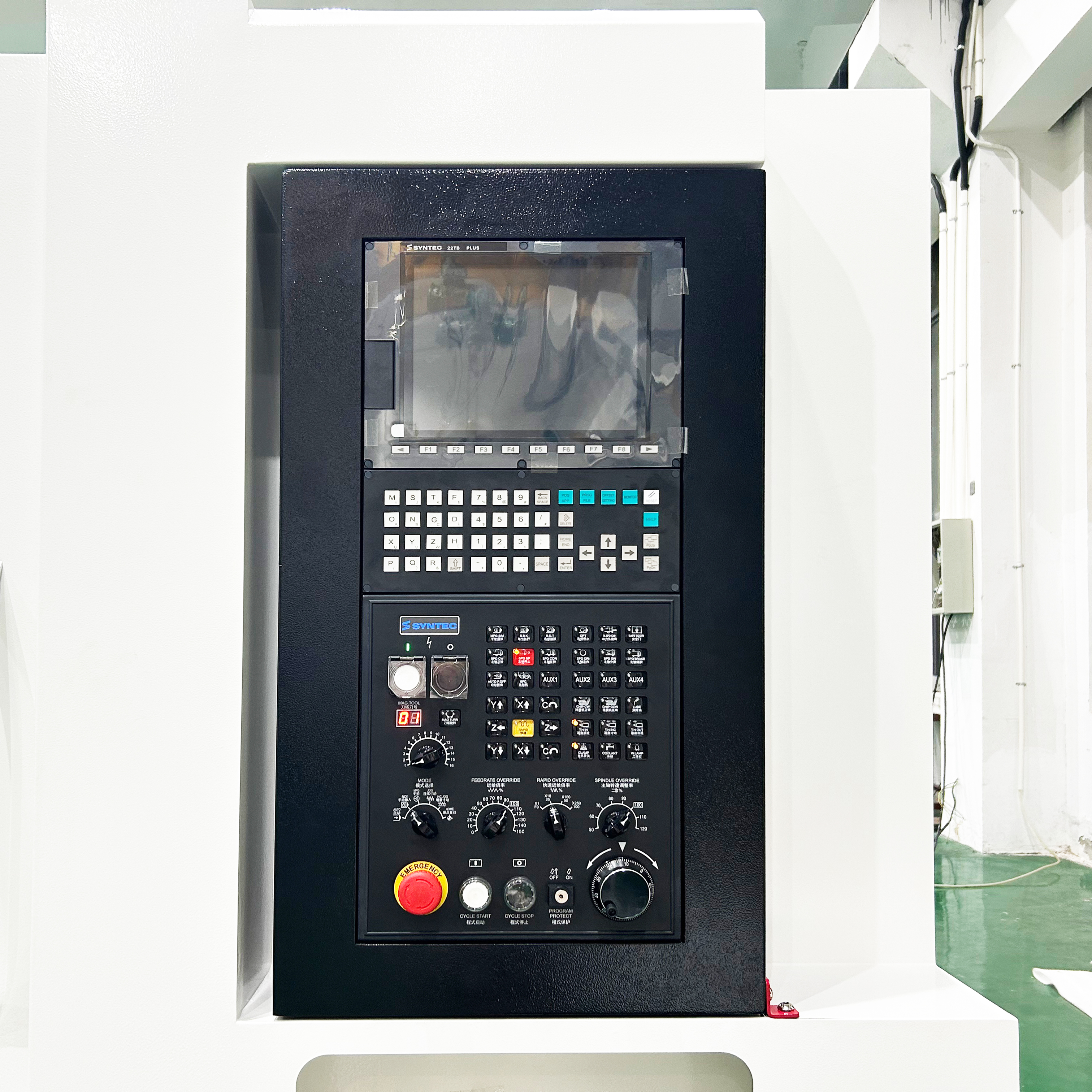
Managers often confuse basic simulation tools and true digital twins. Understanding this technical distinction is critical for your technology strategy. Each category serves a different purpose in the programming workflow.
These legacy tools present distinct limitations. They rely heavily on idealized CAM data. They do not read the final post-processed G-code. They work well for basic geometric checks and visual clearances. However, they remain insufficient for detecting machine-specific timing issues. They easily miss controller macro errors or complex subprogram conflicts. You cannot trust them for definitive safety verification.
These advanced platforms evaluate the exact G-code. This code runs on your specific CNC Lathe controller. They factor in real-world machine parameters seamlessly. They account for accurate acceleration and deceleration curves. They also replicate unique controller-specific behaviors. If your physical controller pauses for a tool change, the digital twin mirrors this exact timing.
These systems represent the highest tier of virtual manufacturing. They incorporate dynamic material cutting forces into the simulation. They analyze thermal deformation during heavy material removal. They also integrate live tool wear data. This approach aligns perfectly with predictive maintenance strategies. It ensures long-term accuracy enhancements across your entire fleet.
Technology Type | Data Source | Primary Capability | Limitation |
|---|---|---|---|
CAM-Based Simulation | Idealized CAM Trajectories | Basic geometric clearance checks | Ignores post-processor formatting and macro logic. |
NC-Code Digital Twin | Post-Processed G-Code | Exact controller behavior replication | Requires precise virtual machine modeling upfront. |
Physics-Informed Twin | G-Code + Material Physics | Force, thermal, and wear prediction | Demands significant computational power and data input. |
Selecting the right platform requires methodical evaluation. You must analyze software capabilities across several strict dimensions. This ensures long-term viability for your engineering teams.
You must assess out-of-the-box accuracy carefully. Does the software provide highly accurate kinematic models natively? Some vendors supply OEM-specific models immediately. Others require expensive bespoke modeling efforts. You must accurately represent all physical boundaries inside the software. This includes chucks, custom jaws, turrets, tool blocks, and tailstocks. Missing a subtle tool block dimension causes unseen physical collisions.
Evaluate platform seamlessness during your trials. How well does it ingest models from existing CAD/CAM systems? You need bi-directional data flow capabilities. This feature allows effortless updates for complex tool libraries. It also syncs fixture parameters instantly across platforms. Programmers save countless hours of manual data entry. Strong integration prevents transcription errors.
Your software choice must adapt to future facility growth. Determine if the platform scales smoothly. You might start modeling a standard two-axis machine today. Later, you may upgrade to a complex CNC Mill-Turn Machine. This equipment frequently features sub-spindles and continuous B-axis milling heads. You should not need entirely new software architectures for these upgrades. The core engine must handle multi-channel synchronization natively.
Defense and aerospace manufacturers face strict data regulations. Evaluate your deployment options carefully. Compare on-premise installations against cloud-based hosting environments. Ensure the platform maintains strict ITAR compliance. Implement robust IP protection protocols immediately. You must secure all proprietary toolpaths from unauthorized external access. Cloud convenience must never compromise your intellectual property.
Adopting new technology introduces operational friction. You must anticipate these hurdles. Proactive mitigation strategies ensure a smooth rollout across your facility.
The "Garbage In, Garbage Out" Hurdle: A digital twin is only as accurate as its input data. You must acknowledge this harsh reality. Implementation requires rigorous initial auditing. You must verify all tool libraries manually. You must also measure fixture dimensions precisely. Bad input data guarantees a bad simulation result.
Post-Processor Alignment: Beware of mismatched post-processors. Discrepancies often occur between CAM software and the digital twin interpreter. You face significant risks here. Dedicate ample time for initial calibration. Ensure both systems interpret G-code identical to your physical machine.
Cultural Adoption: Technology alone does not guarantee success. Address shop floor friction proactively. Experienced machinists often rely on manual MDI overrides. They tweak feeds and speeds at the control panel instinctively. Transitioning them requires trust-building. They must learn to rely entirely on upfront virtual validation instead of panel edits.
Transparent ROI Assumptions: Avoid vendors claiming instant profitability. Acknowledge the realistic timeline publicly. The first three to six months involve heavy setup overhead. Profitability scales gradually over time. Returns accelerate rapidly as your library of verified digital assets grows.
Selecting the best vendor requires a highly systematic approach. Follow these steps during your procurement phase to ensure optimal results.
Requesting Proof of Concept (PoC): Do not accept generic demo files. Mandate a highly customized demonstration. Vendors must process your proprietary complex-part G-code. This proves their system handles your specific geometry. It also exposes hidden software limitations early.
Evaluate Support Infrastructure: Hardware changes over time. Assess the vendor's service level agreement carefully. Can they troubleshoot post-processor errors quickly? Will they update machine models promptly? Physical equipment retrofits demand immediate virtual updates. Poor support stalls your entire production line.
Pilot Strategy: Avoid facility-wide rollouts initially. Recommend a targeted deployment instead. Deploy the software on a single high-bottleneck machine. Measure the exact setup-time reduction first. Use this tangible data to justify broader expansion to upper management.
Digital twins have evolved far beyond speculative R&D concepts. They function as necessary risk-management tools today. High-value discrete manufacturing demands this level of operational certainty. You must protect your expensive capital equipment from catastrophic programming errors.
Successful evaluation hinges on demanding undeniable evidence. You must verify exact NC-code accuracy during vendor demonstrations. Prioritize practical integration realities over flashy marketing claims. Furthermore, commit to strict data hygiene during implementation. Start your journey by auditing your current post-processors and tool libraries. Then, invite top vendors for a custom proof of concept using your most complex parts.
A: CAM simulates the planned, idealized toolpath geometry. It simply shows what you want to happen. A true digital twin simulates the exact post-processed NC code. It processes the actual G-code and factors in true machine kinematics, timing, and unique controller behaviors.
A: Yes, you can integrate legacy machines. However, older equipment often lacks accessible CAD models or modern digital controllers. This situation requires manual 3D modeling and custom post-processor integration. These extra steps will increase your upfront implementation costs and timeline.
A: ROI depends heavily on part complexity and production volume. You typically realize a return quickly. Preventing a single major machine crash often pays for the software instantly. Alternatively, reducing setup times across four to six complex part introductions delivers measurable financial returns.
A: No, it elevates their role significantly. The software removes the tedious trial-and-error phase on the shop floor. Programmers can confidently focus on higher-value tasks. They optimize toolpaths for faster cycle times and improved tool life rather than worrying about basic collision avoidance.


