

Views: 0 Author: Site Editor Publish Time: 2026-03-16 Origin: Site


A Servo Turret CNC Lathe Machine is an advanced turning system designed to improve machining efficiency, accuracy, and automation in modern manufacturing. CNC lathes are widely used to produce cylindrical parts by rotating the workpiece while cutting tools remove material to achieve the desired shape and size.
One of the most critical components in a CNC lathe is the turret system. The turret acts as a rotating tool holder that can store multiple cutting tools and automatically index the required tool during machining operations. This design allows the machine to perform several processes—such as turning, facing, drilling, and threading—without manually changing tools.
A servo turret uses a servo motor and digital control technology to rotate and position the turret precisely. Compared with traditional mechanical or hydraulic turret systems, servo turrets provide faster tool indexing, higher positioning accuracy, and improved reliability.
With the increasing demand for high-precision and automated production, servo turret technology has become widely used in modern precision machining. It enables manufacturers to perform multi-tool machining, reduce downtime between tool changes, and significantly increase overall productivity in CNC turning operations
A servo turret is an advanced tool indexing system used in CNC lathes to automatically rotate and position multiple cutting tools during machining. In a Servo Turret CNC Lathe Machine, the turret is driven by a servo motor and controlled by the CNC system, allowing the machine to quickly select the required tool and perform different operations without manual intervention.
Compared with traditional turret systems, servo turrets provide higher positioning accuracy, faster indexing speed, and more stable performance, making them widely used in modern precision turning applications.
A servo turret refers to a turret mechanism powered by a servo motor rather than hydraulic or purely mechanical systems. The servo motor precisely controls the rotation of the turret, enabling it to index to the correct tool station quickly and accurately.
This system typically operates with encoder feedback control, which forms a closed-loop control system. The encoder continuously sends position signals to the CNC controller, ensuring the turret reaches the exact tool position required by the machining program.
Once the turret reaches the target position, it automatically locks in place before machining begins. This automatic indexing process allows CNC lathes to switch between tools efficiently, reducing idle time and improving production efficiency.
A servo turret system is composed of several critical components that work together to ensure precise and reliable operation.
Servo Motor
The servo motor provides the driving force that rotates the turret to different tool positions. It allows accurate control of speed, direction, and positioning.
Encoder
The encoder monitors the rotational position of the turret and sends real-time feedback to the CNC controller. This feedback ensures precise tool positioning and prevents indexing errors.
Turret Disc
The turret disc is the rotating plate that holds multiple cutting tools. Each position on the disc represents a tool station where different tools can be mounted.
Locking Mechanism
After the turret reaches the correct tool station, the locking mechanism secures the turret firmly in place. This ensures high rigidity and stability during machining operations.
Tool Stations
Tool stations are the individual positions on the turret where cutting tools are installed. Common configurations include 8, 10, or 12 tool stations, allowing multiple operations to be performed without changing tools manually.
The operation of a servo turret is fully controlled by the CNC machining program.
The CNC program calls the specific tool required for the next machining operation.
The servo motor drives the turret to rotate toward the selected tool station.
The encoder provides feedback to ensure accurate positioning.
The turret reaches the correct position and the locking mechanism secures it firmly.
The machining process continues with the selected tool.
By combining servo motor drive and encoder feedback, servo turrets can achieve precise tool positioning and fast automatic tool changes, significantly improving the efficiency and accuracy of CNC turning operations.
A Servo Turret CNC Lathe Machine offers several advanced features that significantly improve machining efficiency, precision, and automation. By integrating servo motor technology with CNC control systems, these machines can perform multiple machining operations quickly and accurately, making them highly suitable for modern precision manufacturing.
One of the most important features of a servo turret system is its high positioning accuracy. The turret is driven by a servo motor and monitored by an encoder, which allows the CNC controller to precisely control the indexing position.
This closed-loop control system enables micron-level indexing accuracy, ensuring that each tool is positioned exactly where it should be before machining begins. As a result, the machine can maintain stable repeatability, which is essential for producing high-precision components in batch production.
Servo turret systems are designed for rapid tool indexing, allowing the turret to rotate quickly from one tool station to another. This reduces the amount of non-cutting time during machining cycles.
By minimizing idle time between operations, the machine can complete more machining tasks in a shorter period. This improvement directly leads to higher productivity, which is especially important in high-volume manufacturing environments.
Another key feature of servo turret CNC lathes is the ability to accommodate multiple tool stations. Common turret configurations include:
8 tool stations
10 tool stations
12 tool stations
With multiple tools mounted on the turret, the machine can perform multi-process machining within a single setup. For example, turning, drilling, boring, and threading operations can all be completed sequentially without manual tool changes, greatly improving production efficiency.
Servo turret CNC lathes operate under CNC program control, which enables fully automated tool selection and indexing during the machining process. Once the machining program is set, the system automatically calls the required tools and performs each operation according to the programmed sequence.
This high level of automation helps reduce manual intervention, lower labor requirements, and improve consistency in machining results. Compared with traditional turret systems, servo-driven systems offer faster response speed, higher stability, and better integration with automated production processes.
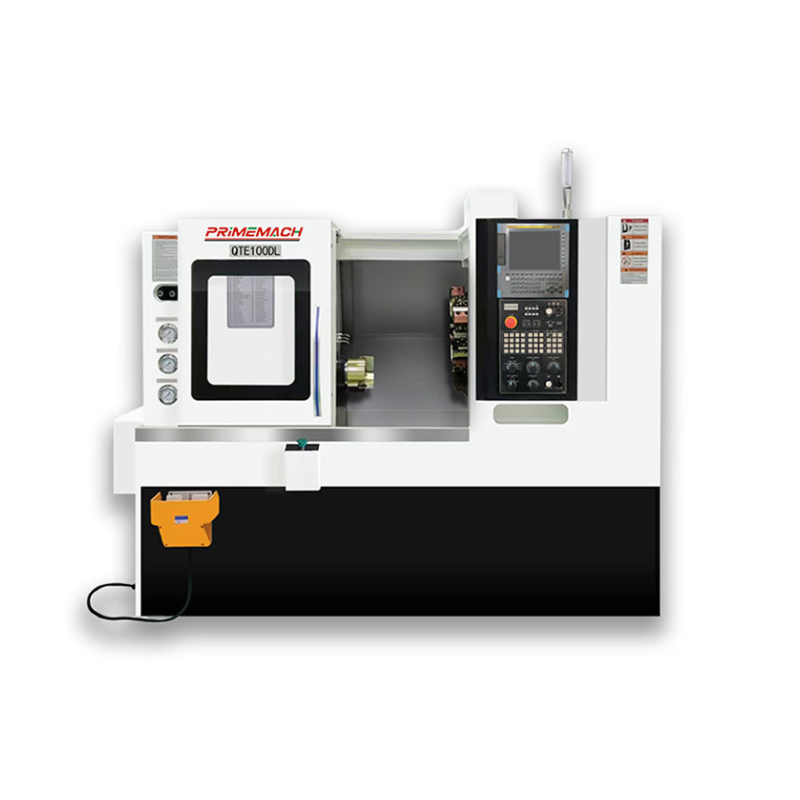
When selecting a Servo Turret CNC Lathe Machine, manufacturers often compare servo turrets with hydraulic turrets. Both systems are designed to hold multiple tools and automatically index them during machining, but they differ significantly in their driving mechanisms, performance characteristics, and maintenance requirements.
Understanding these differences helps manufacturers choose the most suitable turret system based on their production needs, machining precision, and operating environment.
The primary difference between the two systems lies in how the turret is powered.
A servo turret is driven by a servo motor, which is controlled electronically by the CNC system. This motor precisely controls the rotation and positioning of the turret, allowing accurate and flexible indexing.
In contrast, a hydraulic turret uses a hydraulic oil system to drive the indexing mechanism. Hydraulic pressure rotates the turret and activates the locking mechanism. While hydraulic systems can provide strong clamping force, they rely on mechanical and fluid-based components for operation.
Servo turrets operate using closed-loop control, where an encoder continuously sends position feedback to the CNC controller. This allows the system to monitor and adjust the turret position in real time, ensuring extremely precise tool alignment.
Hydraulic turrets typically rely on mechanical positioning mechanisms combined with hydraulic actuation. Although they can provide reliable positioning, their accuracy is generally lower compared with servo-controlled systems.
Servo turrets are known for their fast indexing speed. The servo motor can quickly rotate the turret to the required tool station, reducing idle time during machining cycles.
Hydraulic turrets usually require slightly longer indexing time due to the hydraulic pressure build-up and mechanical movement involved in the process.
Hydraulic turret systems require regular maintenance of the hydraulic components, including oil replacement, seal inspection, and potential leakage management.
Servo turrets typically have simpler maintenance requirements, as they rely mainly on electric motors and electronic control systems. However, servo turret systems may have a higher initial cost due to the advanced control technology involved.
Hydraulic turrets are commonly used in heavy-duty machining environments, where strong locking force and durable mechanical structures are required.
Servo turrets are widely used in high-precision CNC turning applications, where fast tool indexing, accurate positioning, and automation are important for improving machining efficiency.
Overall, servo turrets generally provide higher positioning accuracy and faster tool switching than hydraulic turrets, making them a popular choice for modern precision machining and automated production lines.
When selecting a Servo Turret CNC Lathe Machine, another common comparison is between a servo turret and a power turret (also known as a live tool turret). Both systems are designed to hold multiple tools and automatically index them during machining, but they differ in functionality and machining capabilities.
Understanding these differences can help manufacturers choose the right turret configuration based on the complexity of the parts and the required machining processes.
A servo turret is primarily designed for turning operations. It is driven by a servo motor that rotates the turret to different tool stations, allowing the machine to quickly switch between tools such as turning tools, drilling tools, and threading tools.
Typical operations performed with a servo turret include:
external and internal turning
facing
drilling
boring
threading
Servo turrets are widely used in CNC lathes that focus on high-efficiency turning processes, where fast tool indexing and accurate positioning are essential for producing precision parts.
A power turret is a more advanced turret system that includes driven tools powered by built-in motors. Unlike a standard servo turret, a power turret allows cutting tools to rotate, enabling the machine to perform both turning and milling operations.
With driven tools, a power turret can perform additional machining processes such as:
milling
tapping
cross drilling
slot machining
This capability allows a CNC lathe to function more like a turn-mill center, reducing the need for secondary machining operations on separate machines.
The choice between a servo turret and a power turret largely depends on the machining requirements of the workpiece.
If the parts mainly require turning operations, a servo turret CNC lathe is usually the most cost-effective and efficient option. It provides fast tool indexing, high accuracy, and reliable performance for standard turning tasks.
However, if the parts require both turning and milling operations, a power turret is a better solution. Its driven tools allow the machine to perform more complex machining processes in a single setup, improving production flexibility and reducing processing time.
In summary, power turrets support both turning and milling tools, while servo turrets are typically optimized for turning operations, making each system suitable for different manufacturing needs.
A Servo Turret CNC Lathe Machine offers several important advantages that make it a popular choice in modern precision manufacturing. By combining servo motor technology with CNC control systems, these machines provide improved machining efficiency, accuracy, and automation compared with traditional turret systems.
Servo turret systems enable fast tool indexing, allowing the turret to quickly rotate to the required tool position. This significantly reduces idle time between machining operations.
Because multiple tools are mounted on the turret, the machine can perform several processes—such as turning, drilling, and threading—within a single machining cycle. As a result, manufacturers can increase production output and improve overall machining efficiency.
Servo motors work together with encoder feedback to create a closed-loop positioning system. This ensures that each tool station is accurately positioned every time the turret indexes.
The result is high machining precision and stable repeatability, which are critical for producing parts that require tight tolerances and consistent quality in batch production.
With multiple tools pre-installed on the turret, operators do not need to manually change tools during the machining process. The CNC system automatically calls the required tool according to the program.
This feature significantly reduces machine setup time, shortens production cycles, and allows manufacturers to respond more quickly to production demands.
Servo turret CNC lathes are designed to operate continuously in demanding production environments. Their stable structure, reliable turret locking mechanism, and precise servo control allow them to maintain consistent performance during long machining cycles.
This makes them particularly suitable for mass production of precision components, where reliability and repeatability are essential.
Compared with hydraulic turret systems, servo-driven systems typically consume less energy because they rely on electric motors instead of hydraulic pumps and fluid systems.
This energy-efficient design helps reduce operating costs while also supporting more sustainable and environmentally friendly manufacturing processes.
A Servo Turret CNC Lathe Machine is widely used in industries that require high precision, efficiency, and consistent machining quality. Thanks to its ability to perform multiple turning operations with automatic tool indexing, it is especially suitable for manufacturing complex parts in medium-to-high volume production environments.
Servo turret CNC lathes are commonly used across a variety of manufacturing sectors, including:
Automotive Parts Manufacturing
The automotive industry requires large quantities of precision components such as shafts, bushings, and threaded parts. Servo turret CNC lathes enable efficient mass production while maintaining strict dimensional tolerances.
Aerospace Components
In aerospace manufacturing, parts often require high accuracy and stable machining performance. Servo turret lathes are used to produce precision cylindrical components that meet demanding engineering standards.
Hydraulic and Pneumatic Parts
Hydraulic and pneumatic systems rely on components such as valve bodies, connectors, and sleeves that require precise turning and threading operations. Servo turret machines allow multiple machining processes to be completed in one setup.
General Machinery Parts
Manufacturers of industrial equipment frequently use servo turret CNC lathes to produce mechanical components such as couplings, housings, and rotating parts used in machinery systems.
Medical Components
In the medical industry, many devices require small and high-precision metal parts. Servo turret CNC lathes help ensure the consistency and accuracy needed for these critical applications.
Servo turret CNC lathes are capable of producing a wide range of cylindrical and rotational components, including:
Shafts
Bushings
Discs
Threaded components
These machines are particularly effective for machining complex shafts, discs, and sleeve-type parts, where multiple turning processes—such as facing, drilling, boring, and threading—need to be performed in sequence.
Because of their high efficiency and precision, servo turret lathes have become a key piece of equipment in modern automotive, industrial, and precision manufacturing production lines.
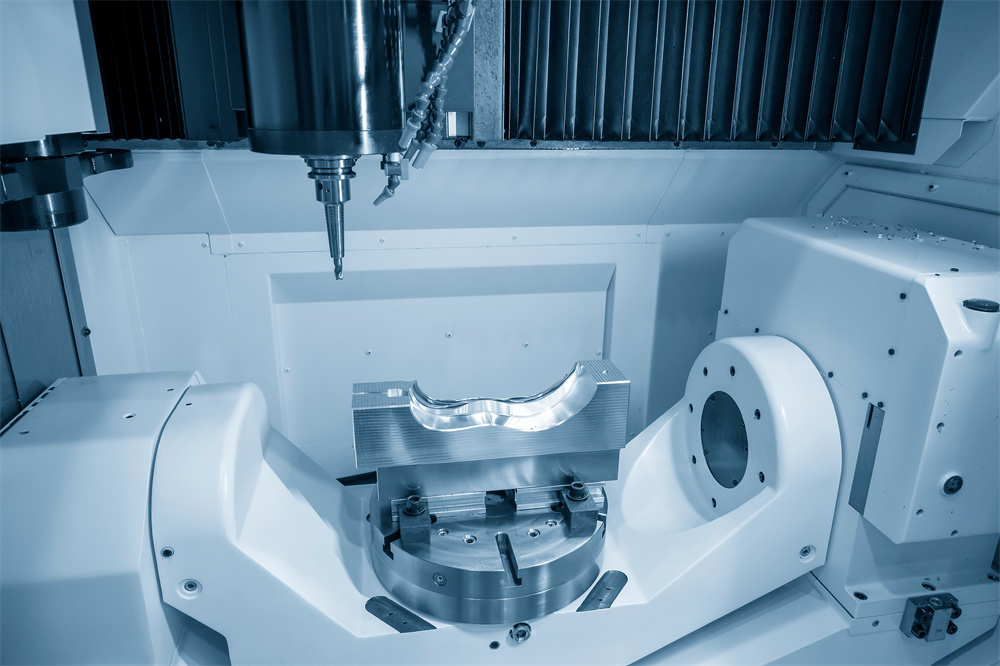
Selecting the right Servo Turret CNC Lathe Machine is essential for achieving optimal machining performance, efficiency, and long-term reliability. Different industries and production requirements may demand different machine configurations, so manufacturers should evaluate several key factors before making a decision.
The number of tool stations determines how many cutting tools can be mounted on the turret at the same time. Common configurations include 8, 10, or 12 tool stations.
A larger number of tool stations allows the machine to perform more machining operations in a single cycle without manual tool changes. This improves production efficiency, especially when machining complex parts that require multiple processes.
Turret rigidity plays a critical role in maintaining machining stability and accuracy. A rigid turret structure ensures that the cutting tools remain firmly positioned during operation, reducing vibration and improving surface finish quality.
Machines with strong turret locking mechanisms and high structural strength are better suited for heavy cutting and high-precision machining tasks.
The CNC control system is the core of the machine’s operation. A reliable controller ensures precise motion control, smooth tool indexing, and efficient machining program execution.
Well-known CNC systems often provide better performance, easier programming, and improved compatibility with automation systems, making them a key factor in machine selection.
The spindle speed and motor power determine the machine's ability to process different materials and cutting conditions.
Higher spindle speeds are typically required for small precision parts and lightweight materials, while higher spindle power is important for heavy-duty machining and cutting harder materials such as alloy steel.
Choosing the right balance of spindle speed and power ensures efficient machining and stable cutting performance.
The structural design of the CNC lathe also affects machining performance. The two most common designs are slant bed and flat bed machines.
Slant bed lathes provide better rigidity, improved chip removal, and higher machining stability, making them suitable for high-speed and precision machining.
Flat bed lathes, on the other hand, have a simpler structure and are often more economical. They are commonly used for general turning applications where extreme rigidity or speed is not required.
By carefully considering these factors, manufacturers can select a servo turret CNC lathe machine that best matches their production requirements and machining objectives.
As manufacturing technology continues to evolve, Servo Turret CNC Lathe Machines are becoming more intelligent, automated, and integrated within modern production systems. The future development of these machines is closely linked to the advancement of digital manufacturing and Industry 4.0 technologies.
One of the most important trends is the integration of smart manufacturing systems. Modern CNC machines are increasingly equipped with sensors, data monitoring systems, and network connectivity. These technologies allow manufacturers to collect real-time production data, monitor machine performance, and optimize machining processes through centralized management systems.
Smart manufacturing improves production transparency, enhances quality control, and helps reduce machine downtime.
Another significant trend is the development of multi-axis turning centers. Traditional CNC lathes mainly focus on basic turning operations, but modern machines are designed to handle more complex machining tasks.
By combining servo turrets with additional axes and advanced tool systems, multi-axis turning centers can perform multiple machining processes in a single setup. This reduces part handling, shortens production cycles, and improves overall manufacturing efficiency.
Automation is becoming increasingly important in modern manufacturing environments. Servo turret CNC lathes are now commonly integrated with robotic loading systems, automated material handling equipment, and flexible production lines.
These automated systems allow machines to operate continuously with minimal manual intervention, improving productivity and reducing labor costs. Automation also enhances consistency and reliability in large-scale production.
Artificial intelligence is beginning to play a role in CNC machining optimization. AI-driven systems can analyze machining data, cutting parameters, and tool performance to automatically adjust machining conditions for better efficiency and accuracy.
This technology can also support predictive maintenance, helping manufacturers detect potential equipment issues before they lead to machine downtime.
As these technologies continue to develop, servo turret CNC lathe machines will become more intelligent, efficient, and adaptable, supporting the growing demand for high-precision and highly automated manufacturing.
A Servo Turret CNC Lathe Machine has become an essential piece of equipment in modern precision manufacturing. By combining servo motor technology, accurate tool indexing, and CNC automation, these machines enable efficient and reliable turning operations for a wide range of industrial applications.
One of the key benefits of servo turret systems is their ability to provide high positioning accuracy, fast tool changes, and stable repeatability. These advantages allow manufacturers to improve machining efficiency while maintaining consistent product quality. In addition, the multi-tool turret design makes it possible to perform several machining operations within a single setup, reducing production time and labor requirements.
Servo turret CNC lathes are particularly suitable for applications that focus on high-precision turning processes and medium-to-high volume production. Industries such as automotive manufacturing, aerospace, hydraulic components, and general machinery production rely on these machines to produce complex cylindrical parts with tight tolerances.
As manufacturing continues to move toward automation, efficiency, and smart production systems, servo turret CNC lathes will remain a critical solution for precision machining. Their combination of accuracy, productivity, and reliability makes them an ideal choice for manufacturers seeking to enhance their machining capabilities and remain competitive in today’s advanced manufacturing environment.


